
The perimenopause paradox no one talks about
You're not losing your mind, but it might feel that way. Perimenopause scrambles three separate systems at once: your hormones, your brain chemistry, and your ability to focus on sensation. The result? Arousal that feels like it's happening to someone else, or maybe not happening at all.
Here's what's wild: most advice about sexuality during this phase assumes you're either fully perimenopausal or post-menopausal. But perimenopause is its own beast. Your hormones are chaotic, not gone. Your brain is literally restructuring how it processes dopamine and serotonin. And desire? It's still there, but it's playing by completely different rules.
Lemon clitoral vibrators work during perimenopause precisely because they bypass the parts of your system that are currently offline and speak directly to the parts that still work.
What perimenopause actually does to arousal
Let's separate the three things happening simultaneously.
Hormone chaos. Estrogen and progesterone swing wildly instead of cycling predictably. One week your tissues are relatively plump and responsive. The next week they're thinner and drier. Testosterone, which drives desire across all bodies, also starts a slow decline. This means some days arousal builds easily. Other days, physical stimulation feels like nothing.
Brain fog and dopamine dysregulation. Perimenopause messes with dopamine production. Dopamine is the neurotransmitter that makes pleasure feel pleasurable. It's also what drives anticipation and desire. When dopamine drops or becomes less available, orgasm feels flatter. Arousal takes longer to initiate. Your brain literally can't latch onto sensation the way it used to.
The attention problem. Here's the part nobody mentions: during perimenopause, staying mentally present during sex becomes genuinely difficult. Your brain is cycling through hot flashes, sleep debt, work stress, and random intrusive thoughts. Even if your body wants to be aroused, your mind wanders. That's not psychological. That's chemistry.
Why sensation-focused tools shift this dynamic
A lemon vibrator, or any lemon clitoral vibrator built on suction technology, works during perimenopause because it does something different than traditional vibration.
Regular vibrators rely on consistent buzzing that eventually fatigues the nerve endings. When your dopamine is already down and your tissues are thinner, that fatigue happens faster. Suction, by contrast, uses pulsing waves that keep stimulating fresh nerve endings. The sensation changes constantly, which means your brain has to stay present to process it.
That constant sensory novelty is exactly what dopamine-depleted brains need. When arousal feels distant, the path to pleasure runs through focused sensation, not generic buzzing.
The Lem and other lemon sexual toys also require less direct pressure than traditional vibrators, which matters when tissue sensitivity is unpredictable. On a day when everything feels raw, suction feels safer. On a day when you need more, you can increase the intensity without pain.
How to use a lemon clitoral vibrator during perimenopause chaos
Start with intention, not momentum. You can't sneak into arousal the way you might have before. Set aside actual time, ideally 20-30 minutes, without the expectation of orgasm. Your goal is sensation, not conclusion.
Use the patterns, not just intensity. The Lem vibrator has different suction patterns. Don't just crank it to the highest setting. Spend time moving through patterns 1 through 5. Pattern 2 might feel subtle and meditative. Pattern 4 might feel revelatory. Your brain needs variety to stay engaged.
Layer lubrication intentionally. Water-based lube isn't optional during perimenopause. Tissue changes mean that days when everything feels dry are genuine. Add lube, wait a minute, then start. Lube is not failure. It's a tool that lets the device work the way it's designed to.
Anchor to one thought. Perimenopausal brain fog makes mental distraction brutal during sex. Before you start, pick one sensation to anchor to: the pressure, the rhythm change, the warmth building. When your mind wanders (it will), return to that anchor. This isn't meditation. It's survival.
Expect non-linear results. Some uses will feel incredible. Others will feel like nothing. This isn't because the device failed or because you did something wrong. It's because your hormone levels vary wildly. Sometimes arousal is offline. Sometimes it's just out of reach. Accept that variability without judging yourself.
What changes about pleasure during this phase
You might notice that orgasms feel different. Potentially more interior, less explosive. Some people report feeling multiple smaller peaks instead of one big one. That's not worse. That's just different chemistry expressing itself differently.
You might also notice that pleasure feels more cerebral. Mental state matters more during perimenopause than it did before. Anxiety, distraction, or even mild annoyance at your partner can kill arousal instantly in a way it might not have before. That's not fragility. That's your dopamine system being more selective about what it rewards.
Many people find that solo pleasure returns more easily than partnered pleasure during perimenopause, precisely because you can control the sensory environment completely. There's no need to sync with someone else's timing. No need to manage someone else's expectations. You can create the exact conditions your brain and body need.
The emotional piece that matters
Here's what I work with most in my practice: the grief of perimenopause. Your sexuality has been one thing for 20 or 30 or 40 years. Now it's something else. That's worth actually grieving, not just problem-solving.
Some people move through perimenopause and land on the other side with stronger, more reliable pleasure than they had before. That's possible. But pretending the transition doesn't hurt is just toxic positivity. It hurts. Pleasure changes. Your body feels unfamiliar. That's real.
Using a lemon vibrator during this phase isn't about "fixing" yourself. It's about meeting your body where it actually is, not where it used to be. It's permission to explore pleasure on new terms.
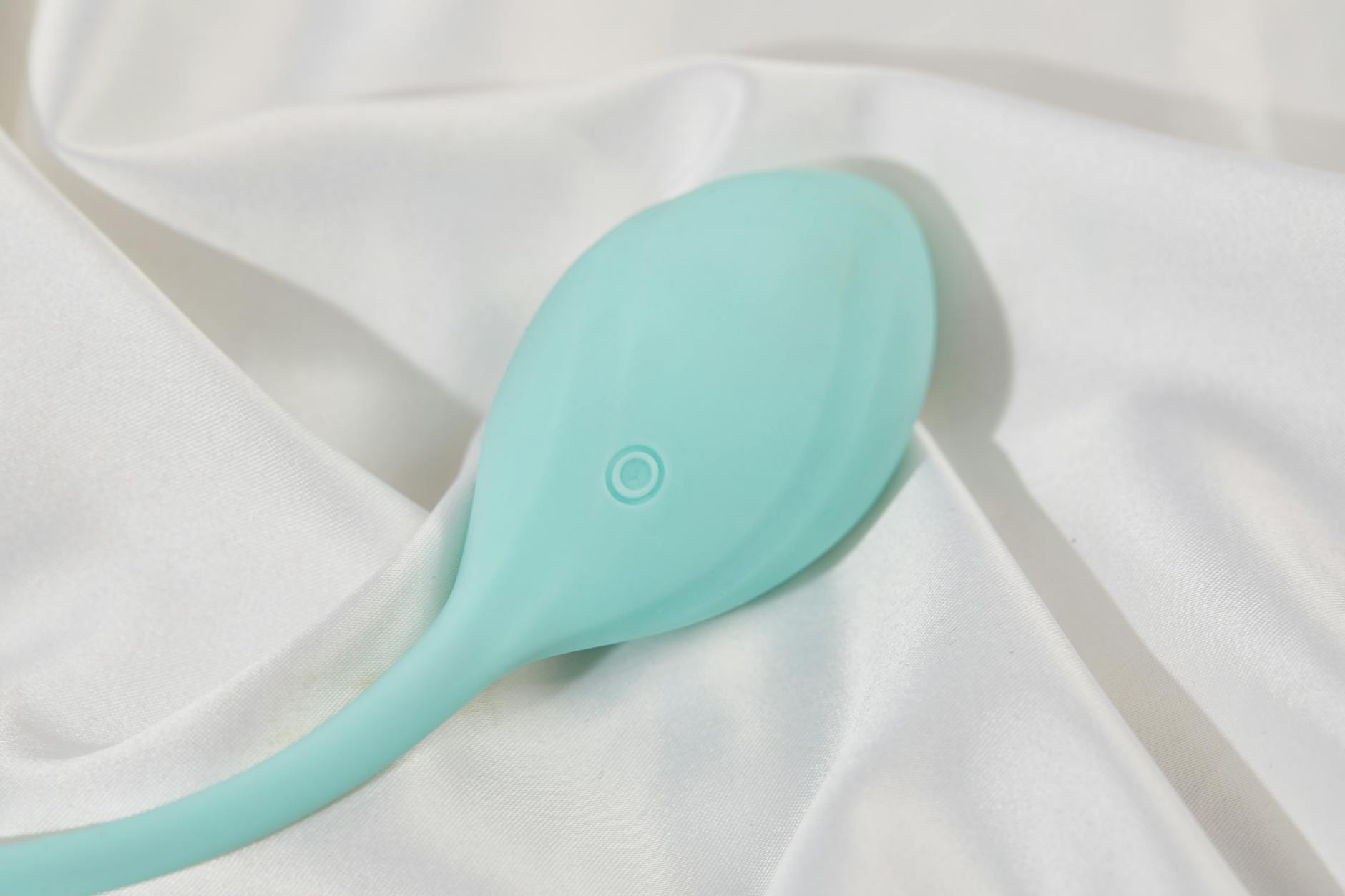
Photo by IFONNX Toys on Pexels
When to talk to a doctor
If you're experiencing vaginal atrophy symptoms (dryness that lube alone doesn't help, pain with any touch, visible thinning), tell your provider. Topical estrogen creams or vaginal moisturizers can genuinely transform the experience in weeks. That's not giving up. That's using available medicine.
If brain fog is severe enough that you can't maintain attention for more than 30 seconds, ask about thyroid function and vitamin B12 levels. Perimenopause fog is normal, but severe fog can signal other things worth investigating.
If desire is completely gone and you're not depressed or on medication that kills libido, a conversation with a menopause-trained provider about testosterone is worth having. It's not prescribed casually, but it exists, and for some people, it's genuinely life-changing.
Why lemon adult toys make sense for this specific phase
You could use any clitoral vibrator during perimenopause. But lemon vibrators, specifically those using suction technology, align with what your brain actually needs: novel sensation that keeps firing new nerve endings and demands enough attention to quiet the fog temporarily.
The Lem vibrator's design works with your changing biology instead of fighting it. It requires less pressure than traditional vibrators. It offers pattern variation instead of just intensity. It lets you control the pace completely.
Is it the only tool that works? No. But for people navigating perimenopausal arousal specifically, lemon clitoral vibrators are genuinely effective in a way that generic tools often aren't.
What happens after
Some people move through perimenopause and into post-menopause and find that pleasure deepens. Others move through it and find it stays complicated. Both are normal. The key is approaching this phase with curiosity rather than resistance.
Your sexuality isn't ending. It's changing. That's different, and it's worth treating as a transition, not a tragedy. Tools like lemon vibrators exist precisely for moments like this one.
People also ask
How long does perimenopause brain fog last and affect arousal?
Perimenopause typically lasts 4-10 years, though brain fog and arousal disruption aren't consistent across that span. Some people experience 2-3 years of noticeable cognitive changes. Others deal with scattered attention for most of the perimenopause window. Arousal changes often follow the same pattern. You might have 6 months of real difficulty, then 3 months of feeling almost normal, then 4 more months of chaos. That variability is the hallmark of perimenopause.
Can a lemon clitoral vibrator actually help if I have zero desire?
Suction-based devices like lemon vibrators can't create desire that isn't there. But they can sometimes awaken sensation that makes desire possible. If you have literally no interest in pleasure and this is new for you, that's worth discussing with a provider. It could be thyroid-related, depression-related, or related to medication. But if you have intermittent desire that's just hard to access, a lemon vibrator can help by providing sensation novel enough to grab your attention.
Is it normal for orgasms to feel different during perimenopause?
Completely normal. Orgasms might feel less intense, more interior, multiwave instead of single-peak, or delayed. Some people report needing more time to build. Others find they need less direct stimulation and more variation. Your nervous system is literally rewiring. Changes to orgasm quality are part of that process.
Do lemon adult toys work better than other vibrators for perimenopause?
For most people during perimenopause, suction-based devices work better than traditional vibrators because they create novelty that keeps your attention and because they require less pressure. But individual experience varies wildly. Some people find traditional vibrators work fine. The key is experimenting without judgment and returning to whatever actually works for your body on a given day.
Should I use a lemon vibrator during my period if I'm perimenopausal?
Sure, if it feels good. Some people find suction feels amazing during their period because blood flow is already elevated. Others find it feels too intense. Perimenopause can make menstrual cycles unpredictable, so one month something feels great and the next month it doesn't. Listen to your body rather than following a rule.
Can lemon clitoral vibrators help with perimenopause anxiety during sex?
Indirectly, yes. When arousal feels easier and pleasure feels more accessible, anxiety often decreases. Sensation-focused tools like Hello Nancy lemon vibrators demand enough mental attention that they can interrupt anxiety spirals temporarily. But if anxiety is severe, working with a therapist alongside using pleasure tools is a better approach than relying on the vibrator alone.
The bottom line
Perimenopause is genuinely hard on arousal. Brain fog, hormone chaos, and tissue changes all make pleasure feel distant and unfamiliar. But it's not gone. It's just playing by different rules.
Lemon vibrators, built on suction technology rather than traditional buzzing, meet those new rules halfway. They provide novelty that dopamine-depleted brains need. They require less pressure than traditional devices. They let you control the experience completely.
If you're navigating perimenopausal arousal, a lemon clitoral vibrator isn't a fix. It's a tool. And sometimes a tool is exactly what you need to remember that your body still works, pleasure is still possible, and you're not broken. You're just in transition.
Ready to explore what works for your body? Start with a conversation: reach out to the Hello Nancy team at /contact with questions about how to choose the right lemon vibrator for your specific situation.