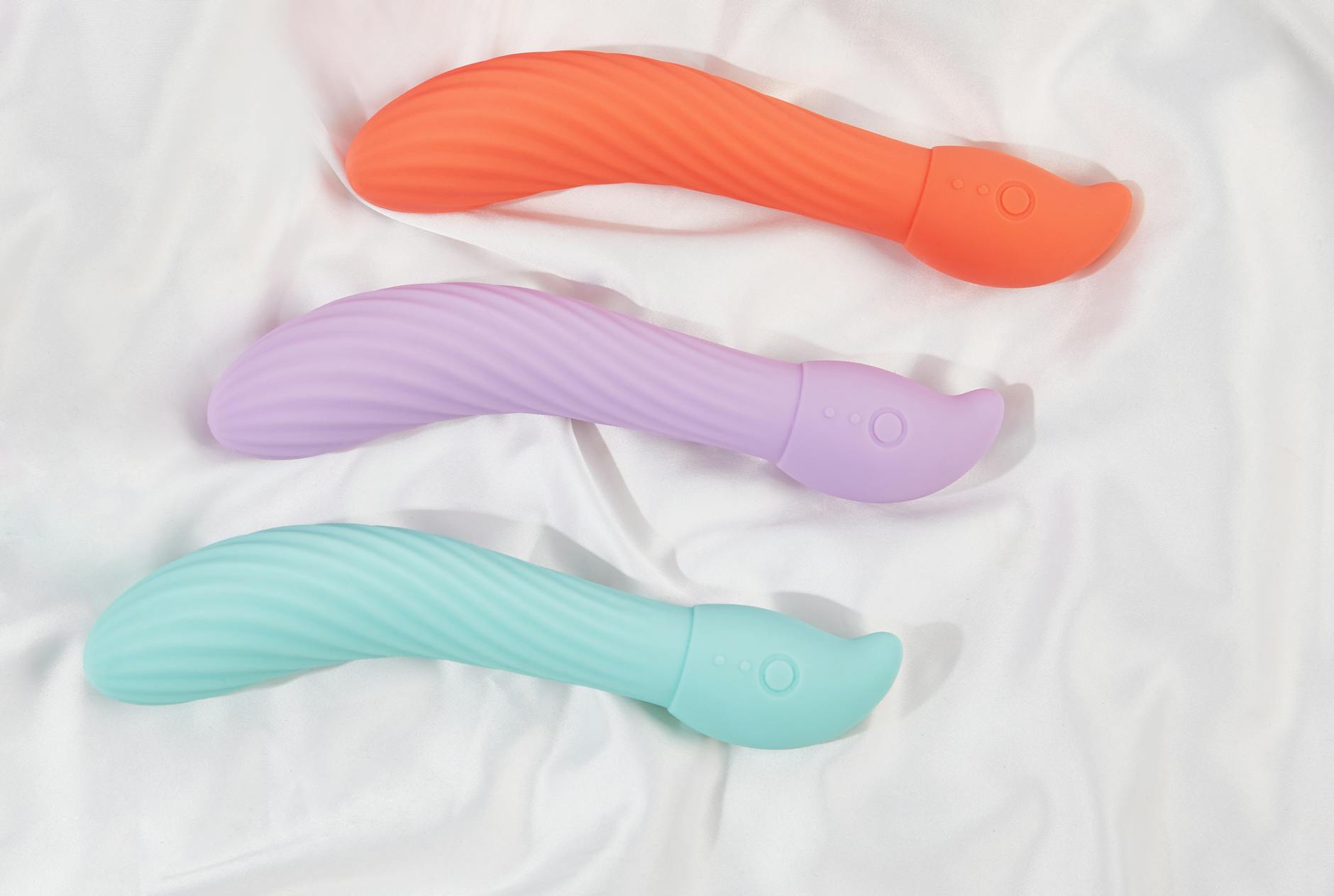
Your partner gets quiet when you mention toys. Maybe they change the subject. Maybe they say something like "I thought I was enough for you" or "That feels weird" or just a flat "I don't know about that." And then the conversation ends because pushing harder feels worse than dropping it.
Here's what I know from working with couples for decades: that resistance isn't usually about the toy. It's about what they think the toy means. And you can't move forward until you untangle that.
I've heard versions of this concern hundreds of times. Let me name the real ones, because naming them changes everything.
"Am I not enough?" They're imagining you secretly wishing for something different, something more. A clitoral vibrator feels like evidence that their hands, their body, their attention isn't cutting it. That fear lives underneath most of the resistance.
"Will you need it every time now?" They're picturing a future where sex becomes dependent on a device. The toy becomes another thing they have to "compete" with or manage. Dependency feels like rejection.
"This is weird and I don't know how to act." Uncertainty reads as risk. If they don't know what to do with a toy, they might freeze up or feel clumsy. And a clumsy moment can feel humiliating.
"Does this mean you're not satisfied with our sex life?" Sometimes that's the real subtext. They hear "I want this" as "What we have isn't working."
None of these are stupid concerns. They're legitimate relationship fears wrapped in toy hesitation. Address the fear first. The toy is secondary.
Don't lead with the lemon vibrator. Lead with curiosity about them.
Start somewhere quiet and low-stakes. "I've been thinking about how we could feel more connected. I want sex to feel good for both of us in a different way. Can we talk about that?" Notice: you're talking about connection and pleasure, not about what's missing.
Then listen. Let them say what they're scared of. Don't defend the toy yet. Just hear it. Say back what you're hearing: "So you're worried that if I use a toy, it means you're not doing something right. That makes sense. That's real." Most people who feel heard are already halfway to open.
Now you can say the true thing: "A clitoral vibrator isn't about you not being enough. It's about a different kind of stimulation that my body responds to. The way you touch me, the way you kiss me, the connection between us. That doesn't get replaced. It gets added to."
This is key: make it collaborative. "I want to explore this together. I want you there. I want it to feel good for both of us." That shifts the frame from you doing something alone to you building something together.
If you're thinking about introducing a toy, a lemon clitoral vibrator is actually a good choice for hesitant partners. Here's why.
Traditional vibrators are more solitary. You can use them alone easily. They work best when you're controlling them entirely. A lemon vibrator, with its suction-based stimulation, is more collaborative by nature. Your partner can hold it. They can feel the suction pull against your body. They're more present in the sensation. It doesn't feel like you're replacing them with a machine. It feels like they're giving you something your body needs and they're part of it.
When you first use one together, have your partner hold it. Let them control the intensity. Tell them what you're feeling in real time. "That's intense there. Can you go a bit gentler?" or "Oh that's perfect, stay there." That feedback makes them the collaborator, not the bystander. Their touch, their attention, their ability to respond to you is still central.
Don't make it a production. You don't need candles and a speech. You need normalcy and low pressure.
Set a boundary first: "If at any point you want to stop or you're not feeling it, we just stop. No judgment. We figure it out." That goes both ways. If you're not comfortable, you say so.
Start with your partner touching you in ways they normally would. Get aroused together the way you usually do. Then, when you're already engaged and already turned on, introduce it. "Want to try something together?" If yes: hand it to them or suggest they try it. If they freeze, take it back and just stick with hands. That's fine. You come back to it.
If they do try it, pay attention to their comfort level. Are they breathing normally or holding their breath? That's anxiety. Is their hand shaking? They're nervous. You can pause and say "You okay?" That question opens space for them to be honest.
Don't expect fireworks on night one. You're building something. It takes a few times for novelty to fade enough for real pleasure to register. The goal right now is: zero shame, real communication, and you both feeling seen.
This matters as much as the experience itself. Afterward, when you're still close, talk about it.
"That was different for me. I loved having you there." Short, honest, specific to what made it work. Don't oversell it. If they ask questions, answer them directly. "Did you feel good?" Yes. "Did it feel better than when we normally do it?" Different, not better. Better is the wrong frame. Different is honest.
If they seem distant, name it gently. "You seem quiet. What's going on?" Let them tell you. Maybe they loved it and they're just processing. Maybe they didn't and they need to sit with that. Both are okay. This isn't about convincing them to like it. It's about building trust through transparency.
Some partners need more time. Some need to try it once and then need a break. Some partners will never be fully comfortable with toys in partnered sex, and that's a real boundary you both get to have.
If that's the case, you have options. You can use a lemon vibrator on your own, in your own time, and keep partnered sex as it is. That's not settling. That's honoring both your needs. You can also suggest that they try one on you while they're watching, without holding it themselves. Less active participation. Less pressure.
Or you can have a deeper conversation about whether your sexual needs are compatible in the long term. That's not a small thing. But it's better to know now than to resent each other later.
Honest conversations about sex are rare. Most couples never really talk about what they want, what they're scared of, what feels good. They just keep doing the same thing over and over.
When you introduce a toy and you do it right, you're doing something riskier and more intimate than sex itself sometimes. You're saying "I trust you with something that feels vulnerable. I trust you to hear what I want without taking it as rejection. I want you in this." That builds real connection.
Your partner gets to see that you're not secretly miserable. You're actively trying to build something better together. That's attractive. That's bonding.
And here's the thing nobody tells you: sometimes a clitoral vibrator actually helps partners understand your body better. They see what you respond to. They learn your rhythm. They get better at pleasure because they're paying attention in a new way. The toy isn't a replacement. It's a teacher.
Introduce the lemon vibrator not as a solution to a problem, but as an expansion of what you already have. You're not fixing anything. You're exploring together. That frame changes everything.
Give it time. Give yourself grace. And if you get stuck, that's what conversations are for. Or if you need outside support navigating this, talking to a relationship coach who specializes in sexual dynamics can help both of you move through the resistance.
Your pleasure matters. Your partner's comfort matters. And both can be true at the same time.
There's a real difference between "I need time to warm up to this idea" and "This fundamentally doesn't align with what I want from sex." Hesitation often comes with curiosity underneath. They ask questions. They want to understand. True disinterest is quieter. It's a firm no with no middle ground. If you're not sure, ask directly: "Is this something you'd be open to exploring, or is it a hard no?" Their answer tells you everything.
Absolutely. Actually, it can help. When performance anxiety is the issue, a clitoral vibrator takes the pressure off both of you to "make" an orgasm happen through penetration or manual stimulation alone. It shifts the focus to sensation and pleasure rather than the goal of orgasm. Your partner gets to be present and responsive rather than executing a technique. That's often less triggering for someone with performance concerns.
Respect that. One experience isn't enough data to make a final decision, but it's also their right to decide it's not for them. The goal isn't to convince them to like it. The goal is for both of you to feel heard. If you want ongoing exploration and they don't, that's a conversation about sexual compatibility, not about the toy itself. That's worth having honestly.
Yes, if you can. Understanding how it feels, what patterns you like, what intensity works for you. That confidence carries into the conversation with your partner. You're not tentatively asking them to explore the unknown with you. You're inviting them into something you already understand. That confidence is less threatening.
Start small. "I read something about how different kinds of stimulation feel different, and I'm curious." Or "I noticed that [specific touch] feels really good for me, and I wonder if there's a way to explore that more." You're not springing a toy on them. You're starting a conversation about pleasure. The tool comes later, once they understand the intent.
That awkwardness is temporary and normal. New things feel awkward until they don't. The conflict, though, might point to a deeper issue. Is it really about the toy, or is it about communication, desire mismatch, or trust? If the conflict doesn't settle after a few honest conversations, that's when outside support helps. A relationship coach who works with couples on sexual dynamics can help you both understand what's really going on underneath.