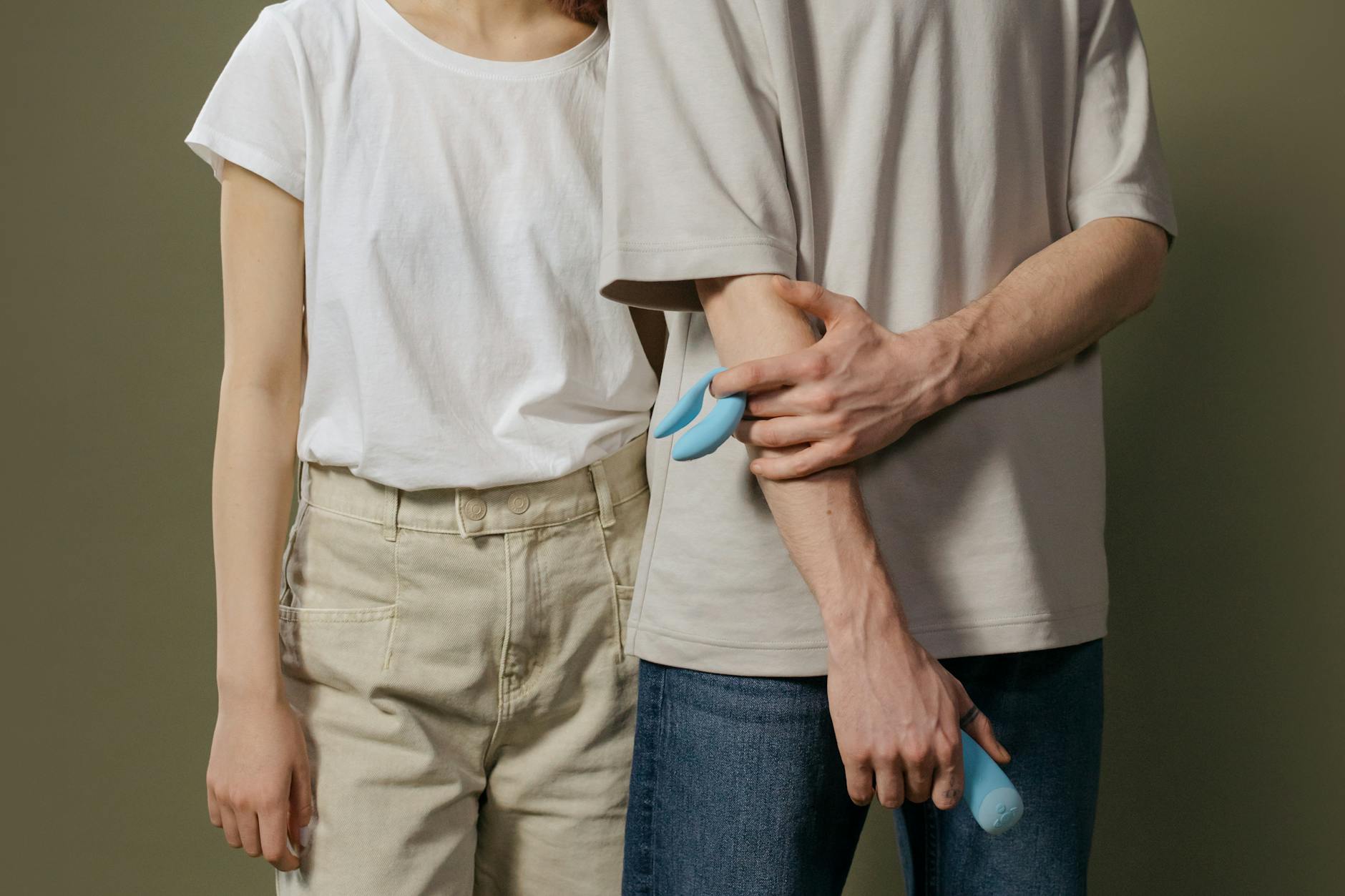
Let's start with the real part
Injury and healing interrupt sex. Full stop. Whether it's a back injury, pelvic surgery, a car accident, or months of pain that made touch feel dangerous, your body learned something: intimacy can hurt. Rewiring that belief is as much about patience as it is about physical recovery.
Here's what I've seen work in my practice: people recover faster when they separate the medical healing timeline from the intimacy timeline. Your doctor might clear you for "regular activity" at six weeks. Your nervous system might need three months. Both are normal. Both need different strategies.
Why sensation matters more than speed
When you've been injured, the worst thing you can do is rush back to pre-injury sex as a benchmark. You're not trying to reclaim what you had. You're building something new. That sounds poetic, but it's actually practical.
After injury, your nervous system is hypersensitive. Not in a good way. Light touch can feel like electrical current. Pressure that used to feel great can trigger protective tension. Reaching for a traditional vibrator during recovery is like trying to run your first post-recovery run at full sprinting speed. Doable, maybe, but it defeats the point.
Lemon clitoral vibrators work differently because they use suction rather than direct vibration. That matters enormously for post-injury bodies. Suction stimulates the thousands of nerve endings in your clitoris without the same sustained pressure that can overstimulate sensitive tissue or trigger pain responses.
The physical timeline after injury
I'm going to be honest about what the research shows, not what your doctor's discharge papers say. Medical clearance to resume sex doesn't mean your tissues are ready for intensity. It means you're not going to tear stitches or damage surgical sites.
Weeks 1-4 post-injury: Likely still painful or too tender. This is observation time, not activity time. Talk to your partner about what touch feels safe. That might be hand-holding, gentle kissing, or clothes-on cuddling. The point is maintaining connection without pressure to perform.
Weeks 5-8: If your doctor cleared you, you can explore solo sensation. This is where the Lem or other lemon adult toys become valuable. Solo exploration lets you learn what your body needs now, without performance pressure.
Weeks 9-12: Your nervous system should start decoupling pain signals from pleasure signals. This is when many of my clients feel ready to involve a partner, but again, slowly.
Week 12+: You're building a new baseline. This isn't "back to normal." This is normal 2.0.
Why lemon vibrators fit this timeline
Traditional vibrators buzz constantly. They require your nervous system to filter the stimulation into pleasure. When you're freshly healed, that filtering is exhausting. Your body is already working overtime to differentiate between safe touch and dangerous touch.
Lemon suction toys create rhythm without that constant bombardment. You control the pulse, the intensity, the pattern. That control is everything for someone rebuilding confidence in their body.
Start at the lowest setting. Seriously. If you used lemon toys before injury, pretend you're new to them. Your sensitivity has changed. Your pelvic floor might be tighter from protection. Your nervous system is primed to be cautious. Honor that.
The solo exploration phase
Before you involve your partner, you need data. What intensity level doesn't trigger tension. Which patterns feel good versus just stimulating. How long feels right before fatigue sets in. Whether penetration feels okay or if you want to stay external.
Set aside 20 minutes in a quiet space. No goal other than information gathering. This isn't about orgasm. It's about learning your post-injury body.
Start with the Lem on level 1. Spend two minutes just holding it against the hood of your clitoris, not active, just presence. Then try the pulse pattern. Notice what happens in your body. Do your hips tense? Does your breathing change? Does it feel safe?
If it does, try level 2. If it doesn't, stop. This is patience as a practice, not a compromise.
Many of my clients find that their orgasms feel different after injury. Shallower, sometimes. More localized. Sometimes more intense because their nervous system is more attuned. Don't compare it to pre-injury pleasure. Document what this body does now.
Bringing your partner into recovery
This conversation matters more than the mechanics. Before sex, before toys, before any physical activity: talk.
Your partner needs to know what healed. "My doctor cleared me" is not the same as "I feel safe with penetration." They need to know what still hurts or feels vulnerable. They need to know that if something triggers pain, it's not about them, and you'll speak up.
Many partners feel guilt during post-injury recovery. They might worry about hurting you again. They might feel like they're not attractive anymore because the sex changed. They might feel pressured to perform perfectly to prove they care. None of that helps anyone.
The best language I've found: "I'm ready to explore this together, but I need us to slow down compared to before. I'll tell you what feels good. If something doesn't work, we pivot, no drama. We're learning my body together."
Using lemon sexual toys with your partner
You have options here. You can use it together, or you can use it solo while they participate another way. Both work.
If you're using it together: they can hold it while you guide the intensity and placement. This gives you control, which matters psychologically and physically. It also keeps them involved without requiring penetrative sex, which might not be comfortable yet.
If you're using it solo: they can be present. Touching you elsewhere, talking to you, creating the emotional intimacy while you handle your physical pleasure. This works exceptionally well for people whose nervous systems need to rebuild trust in their own bodies first.
Start with you directing entirely. "Higher." "Lower." "Different pattern." Your partner follows. After a few sessions, if you want, they can initiate changes. But the first few times, you're in charge.
Common post-injury challenges and what actually helps
Pain during exploration is information, not a stop sign. Does it feel like tissue pain or nerve pain or muscle tension. Where exactly. Does it happen immediately or build over time. Is it consistent or spotty.
If pain appears, pause, breathe, and try again at a lower intensity. If it persists, that's feedback for your doctor, not a reason to give up.
Low arousal after injury is completely normal. Your body has been in protection mode. Arousal requires a nervous system that feels safe enough to be playful. That takes time. Some of my clients use the Lem at very low settings just to practice feeling pleasure without pressure. No orgasm goal. Just sensation.
Emotional stalling is real. You might be physically healed but mentally terrified. This is where the relationship matters most. A partner who is patient and curious rather than goal-oriented makes the difference between frozen and recovered.
When to check in with your doctor
Pain that feels sharp or tearing, not dull or stretching. Bleeding or excessive discharge. Infection signs like fever or unusual odor. Numbness that spreads. Any of these warrant a conversation with your provider.
What won't show up on scans: your confidence, your comfort, your readiness. Those are just between you and your body.
The timeline most people don't mention
Physical healing is three months. Nervous system recalibration is often six. Psychological recovery can be nine or twelve. Don't rush the last two because the first one is technically done. Your clitoral vibrator isn't going anywhere. Neither are you.
Many of my clients find that their post-injury sex life becomes more intentional, more communicative, and frankly, more satisfying than before. Not because injury was good. Because rebuilding together creates a foundation based on honesty rather than habit.
FAQ
When can I start using a lemon vibrator after injury?
If your doctor cleared penetration and external stimulation, you can start exploring solo sensation around week 5 to 8, depending on your specific injury. Start with the lowest intensity setting and focus on learning what your body needs now, not returning to pre-injury sensation patterns.
Will using a clitoral vibrator slow down my physical healing?
No. If anything, gentle sensation stimulation helps your nervous system recalibrate and separate pain signals from pleasure. Just avoid anything that triggers sharp pain or swelling. Gentle suction stimulation promotes blood flow and can support healing.
Can I use a lemon vibrator if I had pelvic surgery?
Yes, but wait for full clearance from your surgeon and start external only. Many people with post-surgical pelvic recovery find that suction-based tools like the Lem feel less intense than traditional vibrators because they don't require the same direct pressure on healing tissue.
How do I tell my partner I'm not ready for penetration but want to explore with a toy?
Direct and simple: "My body's ready for pleasure, but penetration still feels risky. I want to explore using a toy together, where I'm in control of speed and intensity." Most partners appreciate the clarity and the inclusion.
What if orgasm feels different or doesn't happen after injury?
Totally normal. Your nervous system has rewired. Orgasms might feel slower to build, more localized, or require different patterns. Give yourself permission to explore without a goal for six to eight weeks. Most people find their pleasure returns as confidence returns.
Should I use lube with a lemon clitoral vibrator during recovery?
Yes. Even if you didn't before injury. Post-injury or post-surgery, additional lubrication reduces any micro-friction and makes the experience smoother. Water-based lube works best with silicone toys and won't damage them.