Let's talk about the thing couples don't actually discuss
You've been with your partner for years. Maybe decades. And now you're thinking about bringing a lemon vibrator into the bedroom, and you're terrified it means something about them. It doesn't. It means something about you wanting your own pleasure to matter as much as theirs does. That's the conversation.
Most couples introduce toys because one person secretly wants one and the other person finally notices. That backwards approach is why it feels weird. We're going to fix that.
Why after 40 is actually the perfect time
Here's what happens in your forties that didn't happen in your twenties: you stop pretending things are fine when they're not. You get tired of performing. You start thinking about pleasure as something you deserve, not something you earn by being a good partner first.
Desire doesn't always match between partners, especially midlife. One person wants more frequency, or different kinds of touch, or stimulation that takes longer to build. A lemon vibrator isn't a replacement for your partner. It's a tool that lets both of you get what you actually need without anyone having to pretend.
There's also a practical shift. By 40, most of us have enough self-awareness to know what feels good. We're less shy about asking for it. That's not a relationship crisis. That's maturity.
The conversation before you touch anything
Don't hand your partner a lemon vibrator and hope they figure out what you mean. That's how entire relationships get derailed over something that could take fifteen minutes to clarify.
Start outside the bedroom. Over coffee. When neither of you is tired or vulnerable.
The frame that works: "I've been thinking about my pleasure and what actually feels good to me. I want to try something new, and I want you to know about it because I value you. This isn't about you. It's about me taking care of myself."
Notice what you didn't do. You didn't ask permission. You didn't apologize. You didn't say "I still love you" or "Don't worry, I'm not leaving." Those phrases telegraph that you've already decided they should be upset.
Some partners will feel threatened anyway. That's information. If they do, the issue isn't the vibrator. The issue is that they need reassurance about the relationship, and that's a separate conversation. It might be worth having with a therapist.
What your partner might actually be worried about (and how to answer)
Your partner isn't worried the lemon vibrator is better than them. They're usually worried about one of three things.
"Will you stop wanting me?" Answer honestly: no, because wanting them and wanting your own pleasure are two different systems. You can want both. You probably already do. The toy just makes your pleasure possible without them contorting themselves.
"Does this mean I'm not enough?" This one stings. The answer is: you've never been enough, because no single person can be. We all need sleep, friendship, food, privacy, and sometimes professional help. Pleasure works the same way. Adding a lemon clitoral vibrator is like adding a hobby. It doesn't replace your partner. It complements the relationship.
"What if I don't want to watch or participate?" Perfect. You don't have to. Some couples use toys together. Some don't. Both are fine. The conversation is just about consent and boundaries. "I'm going to use this sometimes, and you're welcome to be there or not" is completely reasonable.
How to actually use it together (if they want to)
If your partner is curious, here's the rhythm that works.
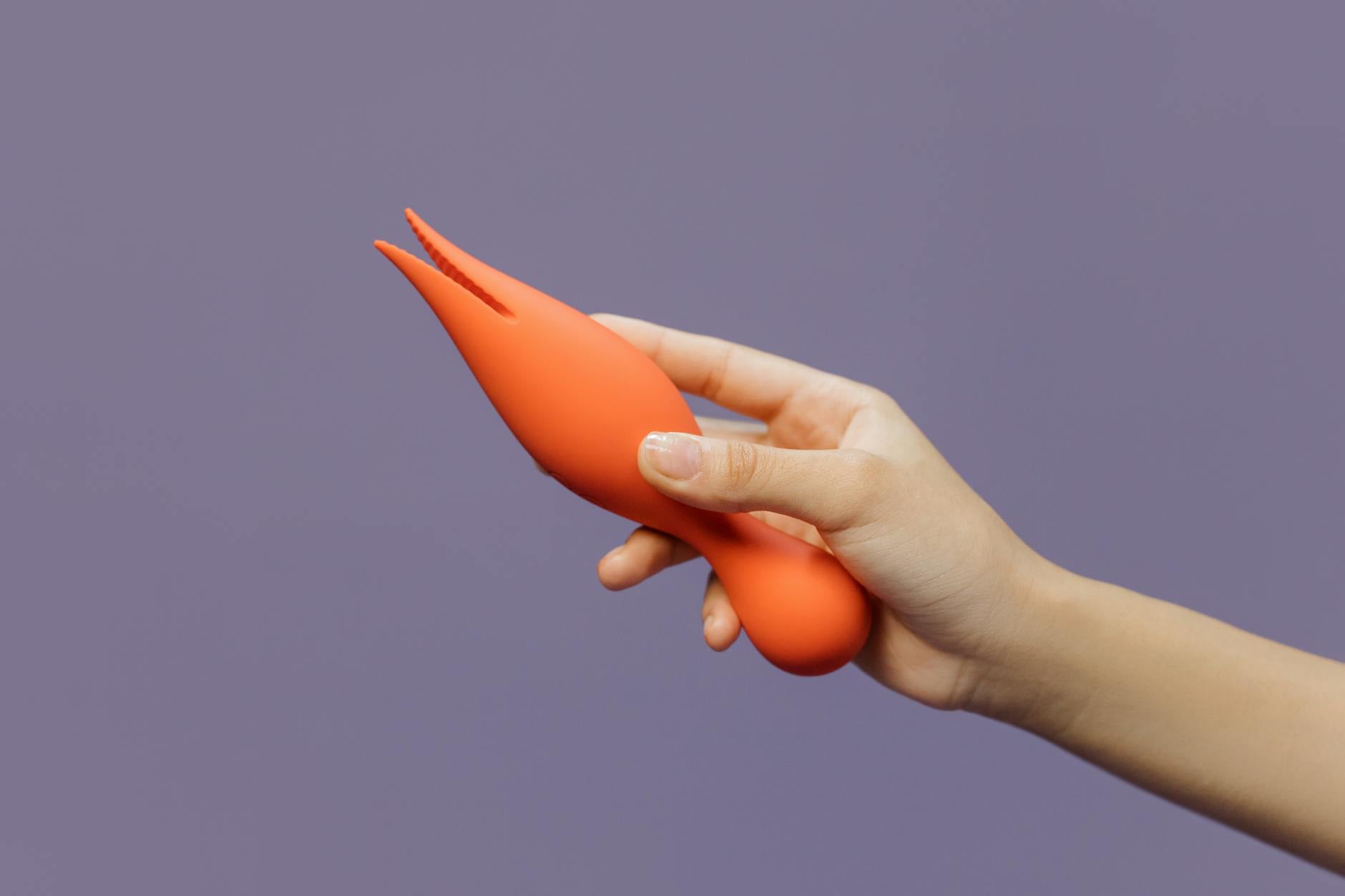
Start by letting them see it. Hold the lemon vibrator. Explain how it works. No mystery. Most partners are less threatened by something they understand. A lemon sucker toy sounds weird until you explain the suction mechanism and why it doesn't require friction the way traditional vibrators do.
Use it on yourself first, alone or with them watching. Show them what feels good. This removes the performance pressure (you're not faking an orgasm for their comfort) and it educates them about your body. "When I use it on this setting, I come in about four minutes" is useful data.
Then, invite them to help. They can hold it if you want to keep your hands free. They can control the intensity. They can focus on kissing you while you use it. The toy becomes something you're doing together, not something you're doing instead of them.
This matters: let them choose their level of involvement. Some partners love being in control of the toy. Some feel more connected if they're just present and paying attention. Some genuinely prefer to leave the room. Honor whatever they say.
The timing question (when, not how often)
There's usually one source of tension: frequency. One person wants the toy involved every time. The other person wants it occasionally or never.
Here's the non-negotiable part: you get to use it whenever you want when you're alone. That's your body. The conversation is only about shared time.
One workable frame: "I'd like to use this when I'm with you sometimes. Not every time. But sometimes. Does that feel okay?" You're asking for permission to integrate it, not asking them to host a vibrator every single session.
If your partner wants it to happen less often than you do, that's a valid boundary. If you want it to happen more often than they're comfortable with, that's also valid. The work is finding the overlap. Maybe it's once a week. Maybe it's once a month. You decide together.
And if your partner wants it integrated into every encounter, and you don't? Same process. You both get to have needs.
Why this actually strengthens the relationship
I've worked with hundreds of couples, and the ones who introduce lemon vibrators and clitoral stimulation tools after 40 almost always report the same thing: we talk more. We touch more. We feel less resentment.
That happens because you've stopped pretending sex is one thing and started treating it as what it actually is: a practice that can evolve, that has different dimensions, that sometimes needs new tools.
Introducing a lemon clitoral vibrator isn't a sign your relationship is broken. It's often a sign that one or both of you are finally willing to ask for what actually feels good.
Troubleshooting the awkward moments
Your partner uses the toy on you and you don't come. That's fine. Orgasm isn't the only good outcome. You also get pleasure, closeness, and better understanding of your body.
Your partner feels self-conscious watching you. Ask them what would feel better. Would they prefer to have their eyes closed? To focus on kissing you instead? To use the toy while you hold them? Adjust.
One of you wants the toy, the other genuinely doesn't. You still get to use it alone. That's not a negotiation. Your solo pleasure is your choice.
You've introduced the toy and now the relationship feels weird. That usually means you're both holding something back. Go back to the initial conversation. What's actually concerning? Address that. The lemon vibrator is just the backdrop.
The pleasure shift nobody mentions
After 40, there's a shift in what feels good. For many people, clitoral stimulation becomes more essential, not less. The lemon sucker design (whether you're using Hello Nancy's Lem or another brand) works particularly well because it doesn't require the direct friction that sensitive tissue struggles with.
Your partner noticing this shift, and being willing to learn new ways to pleasure you, is one of the most intimate things a long-term relationship can offer. It means they're paying attention. It means they want you to feel good enough to keep evolving your own desires.
If you're curious about how your body's pleasure actually changes at different life stages, there's more depth in our post on why lemon vibrators feel different after 35. That article explores the physiology, which can help frame the conversation with your partner.
A final word on desire itself
Desire after 40 looks different than it did at 25. It's often less spontaneous and more responsive. That doesn't mean it's weaker. It's usually deeper, more intentional, and more informed by what you actually want rather than what you think you're supposed to want.
Introducing a lemon clitoral vibrator into a long-term partnership is often the moment one person finally says: my pleasure matters. My body's needs are legitimate. And I'm not going to apologize for that anymore.
Your partner gets to decide how they feel about that. But you get to decide that it's true.
People also ask
How do I tell my partner I want to use a vibrator without them thinking I'm unhappy?
Frame it as pleasure exploration, not as complaint. "I want to try something that feels really good to me" is different than "you're not doing this right." The first is about you. The second is criticism. Also, timing matters. Don't bring this up during sex or during conflict. Calm daylight conversation works better.
Can we use a lemon vibrator if my partner has erectile issues?
Absolutely. That's actually one of the most common reasons couples introduce toys. If your partner struggles with erections or stamina, a lemon sucker toy means you can get satisfied without putting pressure on them to perform in a specific way. It takes the pressure off both of you. Consider framing it as a tool that helps you both feel good, rather than a workaround.
What if I want the toy more often than my partner does?
Then use it alone. You always have that right. For partnered time, you find the overlap. If you want it every time and they want it once a month, maybe you land on twice a month. The negotiation is only about shared sessions, not about your solo pleasure.
Should I ask my partner before I buy a lemon vibrator?
No. Your body is yours. You can buy whatever toys you want for solo use. The conversation is only about integrating it into partnered sex. That's where you need agreement. But your body's pleasure when you're alone? That's entirely your choice.
Is it weird if my partner wants to use the vibrator on themselves instead of me using it?
Not weird at all. Some partners love exploring the toy on their own body, or wanting to use it on you in ways you hadn't considered. Let them. This is how you discover new dimensions of what feels good.
What if my partner refuses and I feel resentful?
Then the issue isn't the toy. The issue is that your need for pleasure matters to you and their refusal to engage with that feels like rejection of you. That's worth exploring with a therapist, together if possible. Sometimes introducing a professional perspective helps partners hear each other differently than they do in private conversation.
Next steps
If you're ready to introduce pleasure tools into your partnership, start with the conversation, not the toy. Clarity before closeness. And if you want practical guidance on how different clitoral vibrators actually feel, our guide to choosing your ideal clitoral vibrator walks through the sensations and designs so you can pick something that matches your body's actual needs.
Your pleasure matters. Your partnership can evolve. And sometimes they both get better at the same time.