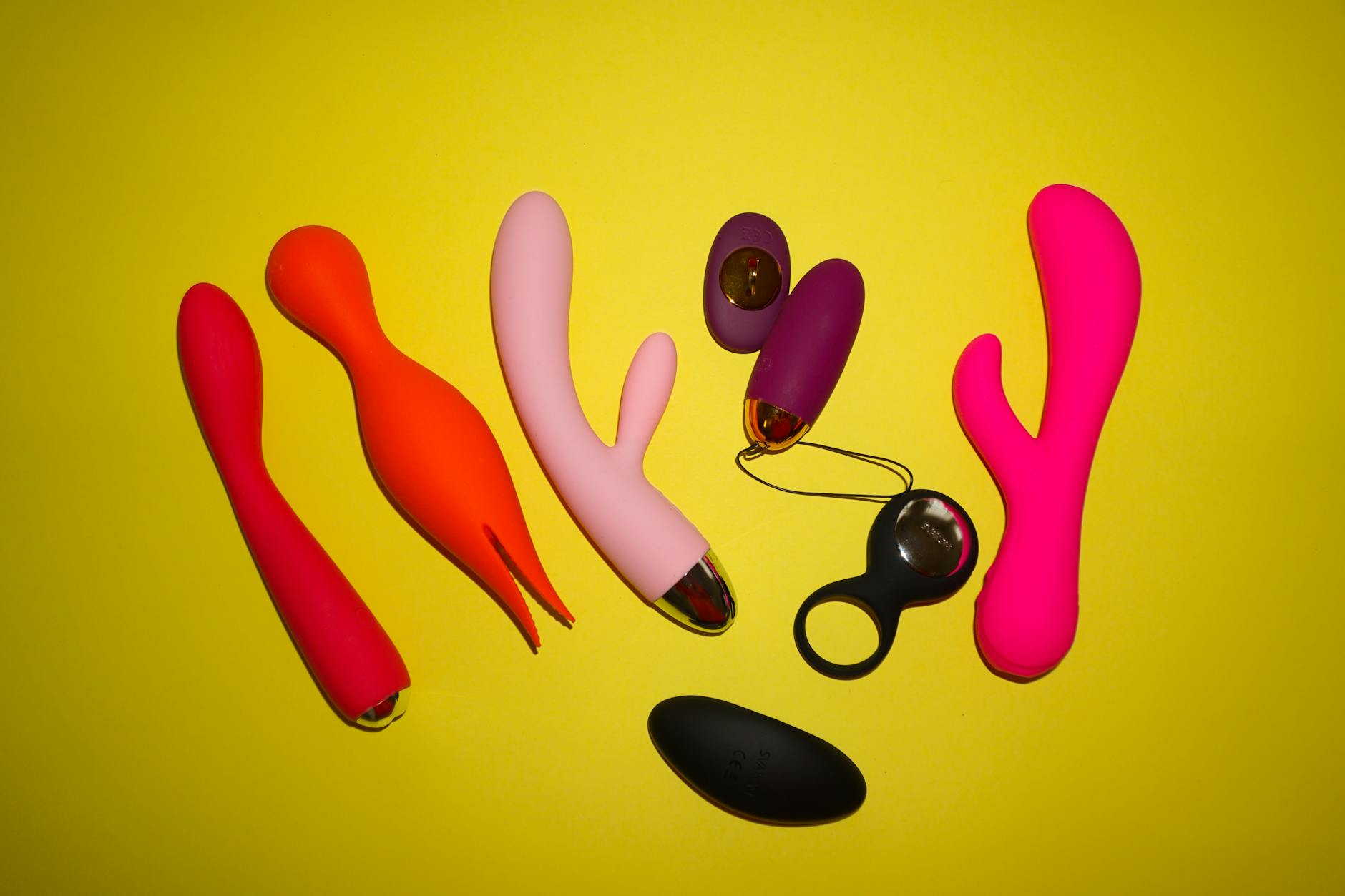
Let's start with the hard truth
Anxiety is an arousal killer. Not metaphorically. Neurologically. When your nervous system is stuck in fight-or-flight mode, your body literally cannot access the parasympathetic (rest-and-digest) activation that pleasure requires. Your brain is too busy scanning for threats to notice your partner's touch, let alone build toward an orgasm.
The result: you want to want sex. You intellectually know pleasure is important. But your body simply won't cooperate. And then you feel guilty about that, which cranks the anxiety up another notch, which makes arousal even harder. The cycle deepens.
Here's what I've learned working with people in this exact situation: Lemon's clitoral vibrators can break that cycle. Not by forcing arousal, but by creating a sensory anchor strong enough that your anxious brain has to pay attention. Once attention lands on sensation, the nervous system has permission to downshift.
How anxiety actually blocks arousal
When you're anxious, your sympathetic nervous system (the accelerator) is running full-bore while your parasympathetic system (the brake) is offline. Arousal requires the opposite: a calm, grounded state where blood can flow to your genitals, where you can feel subtle touches, where your mind is present instead of spinning through worst-case scenarios.
Anxiety also tightens the pelvic floor involuntarily. Tension in the pelvic floor muscles reduces sensation and makes arousal feel impossible because you're literally fighting against your own body. Add in racing thoughts, shallow breathing, and a sense of dread, and it's no wonder pleasure feels completely out of reach.
What makes this worse: you know logically that sex or self-pleasure could help. Orgasm is a natural anxiety release. But you can't get there if you can't get turned on in the first place. So you end up avoiding the whole thing, which reinforces the belief that pleasure isn't available to you right now. That belief becomes the new problem.
Why air-suction clitoral vibrators work when regular vibration doesn't
Most traditional vibrators rely on high-frequency vibration that requires your nervous system to already be somewhat relaxed to feel pleasurable. When you're anxious, that vibration can feel irritating or too intense. Your already-tense pelvic floor tightens further.
Lemon's clitoral vibrators use air-suction technology, which stimulates the clitoris indirectly through gentle suction rather than direct vibration. The sensation is radically different. Instead of vibration that demands your attention, suction creates a rhythmic pressure that feels almost meditative. Your brain's threat-detection system can't dismiss it as a threat.
Moreover, air-suction stimulation triggers the clitoral nerves in a way that doesn't require you to be already aroused. You can be neutral, anxious, distracted, and still feel the sensation building. This is crucial because it means you're not trying to access pleasure from a place of scarcity. The sensation is present whether your mind is cooperating or not.
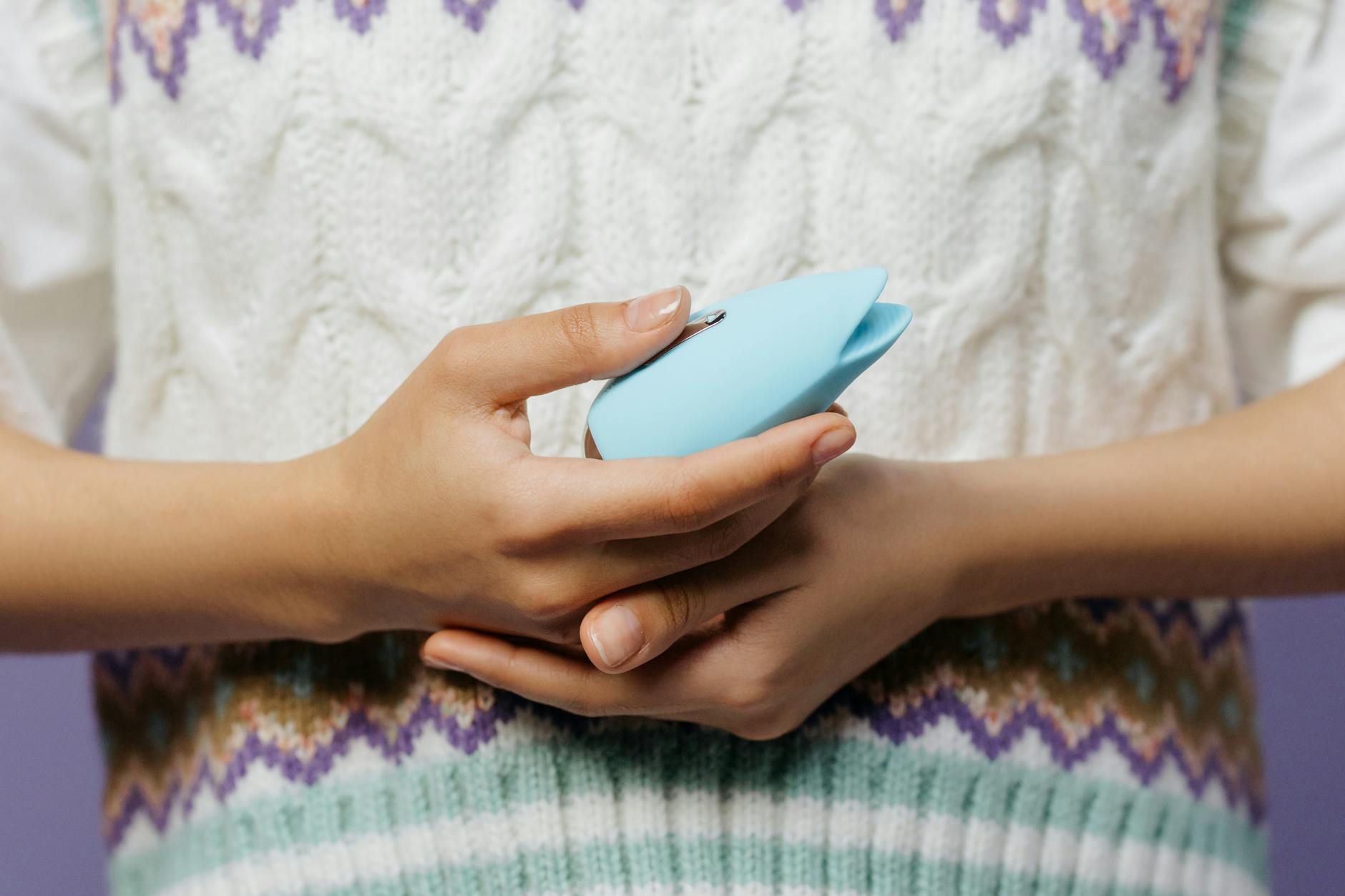
Photo by cottonbro studio on Pexels
The protocol I recommend for anxious arousal
If you're using a Lemon clitoral vibrator while dealing with anxiety, forget everything you think you know about "getting in the mood." That framework doesn't work when your nervous system is stuck.
Instead, approach it as a grounding exercise. Start with your body already relaxed: lying down, no time pressure, phone on silent. Breathe for two minutes before you even touch the vibrator. In for four counts, hold for four, out for six. This activates your parasympathetic nervous system and is the single most effective thing you can do before pleasure.
Use the Lemon on the lowest setting first. Not because you need to build up, but because lower intensity is less jarring. You're teaching your body it's safe. Start with five to ten minutes of gentle stimulation with zero expectation of orgasm. The goal here is sensation and presence, nothing more.
If your mind wanders to anxious thoughts, that's fine. Notice it, then gently bring attention back to the feeling of the suction. Don't fight the thoughts. Just keep redirecting attention to sensation. Over time, your brain learns that this activity is safe and that pleasure is accessible even when anxiety is present.
Pelvic floor release matters more than you think
Anxiety creates pelvic floor tension, and that tension becomes a physical barrier to arousal. A Lemon clitoral vibrator can help, but only if you're also actively releasing that tension.
Before you use the vibrator, spend a few minutes on pelvic floor release. This isn't a Kegel (contracting). It's the opposite. Lie down, put your hand on your lower belly, and deliberately soften everything in your pelvic floor. Imagine the muscles lengthening and releasing. Breathe deeply. If you can, do some gentle hip circles or rock your pelvis side to side.
Once that tension softens even slightly, the Lemon vibrator will feel more effective because there's less muscular resistance. Sensation can build. Arousal becomes possible. People consistently report that their first orgasm happens much more easily once they've released pelvic floor tension first.
Using a Lemon vibrator with a partner when anxiety is present
If you have a partner, let them know what's happening. "I'm dealing with some anxiety around pleasure right now, and I want to use a vibrator in a specific way to help my nervous system recalibrate. I need us to go slow and I need you to not expect a particular outcome."
Most partners actually feel relieved by this clarity. It removes the pressure from them to "perform" or wonder if they're doing something wrong. They can be present while you do the work.
Consider using the Lemon together but independently. You control it, they're beside you, but the focus is entirely on your sensation and your nervous system. Some people find that having a partner present (without having to perform or interact sexually) provides grounding that helps with anxiety.
Alternatively, use the vibrator alone and let your partner know you're doing so. Solo pleasure is often easier when anxiety is high because there's zero performance demand. Once you rebuild the neural pathway that pleasure is accessible to you, partnered pleasure becomes easier.
Managing anxiety during the experience itself
Anxiety often spikes right when arousal starts building. This is your nervous system going, "Wait, are we safe?" It's a survival reflex. When it happens, pause the vibrator and breathe again. In for four, hold for four, out for six. Once your body settles, you can resume.
This is completely normal and not a failure. You're essentially negotiating with your nervous system: "This is safe. Pleasure is safe. We can do this." Each time you pause and resume, you're reinforcing that message. Progress isn't linear. It's rhythmic.
Some people find it helpful to set a timer for 15 or 20 minutes so the mind isn't worried about "how long this is taking." Removing the pressure to climax or achieve anything specific makes the whole experience less fraught.
You might also find that anxiety decreases over successive sessions. Your nervous system learns through repetition. After a few times of using the Lemon without anything going wrong, arousal becomes easier and faster. The neural pathway strengthens.
When to bring in professional support
If anxiety is severely interfering with daily functioning, a clitoral vibrator is helpful but not sufficient. Working with a therapist trained in somatic approaches or EMDR can help reset your nervous system in deeper ways. A sex therapist can also help troubleshoot the specific intersection of anxiety and arousal.
If you're on an antidepressant and noticing anxiety interfering with arousal, talk to your prescriber about timing. Some SSRIs can be adjusted or taken at different times of day to minimize sexual side effects. That adjustment, combined with something like a Lemon clitoral vibrator, can be transformative.
Anxiety isn't a character flaw or a reason to give up on pleasure. It's a nervous system state that can be shifted. Using the right tool, with the right approach, makes a massive difference.
People also ask
Can you get aroused if you have anxiety?
Yes, but your nervous system needs to be calmed first. Anxiety and arousal are physiologically opposite states. To access pleasure when anxiety is present, you need to deliberately activate your parasympathetic nervous system through breathing, relaxation, and time. A Lemon clitoral vibrator can help because the sensation is strong enough to anchor your attention away from anxious thoughts and toward your body. Once attention lands on sensation, arousal becomes possible even if background anxiety is still present.
How long does it take to feel aroused when you have anxiety?
It depends on the severity of anxiety and how dysregulated your nervous system is. Some people feel arousal building within five to ten minutes of using a clitoral vibrator. Others need fifteen to twenty minutes of consistent sensation plus breathing work before arousal becomes accessible. The key is removing time pressure entirely. Telling yourself "I have to get aroused in five minutes" actually makes anxiety worse. Give yourself 20-30 minutes minimum and see what happens when there's no deadline.
Does anxiety make orgasms harder to achieve?
Yes. Anxiety tightens the pelvic floor, increases cortisol, and diverts blood flow away from the genitals. It also makes it harder to focus on sensation, which is essential for orgasm. Many people with anxiety find that orgasms take longer to build or don't happen at all when anxiety is high. Using a Lemon clitoral vibrator designed to work with anxious arousal, combined with pelvic floor release and nervous system regulation, makes orgasm much more accessible even when anxiety is present.
Should you use a vibrator when you're feeling anxious about sex?
Absolutely. If you're feeling anxious about sex or pleasure, using a vibrator in a calm, pressure-free way can help prove to your nervous system that pleasure is safe and accessible. Start low, no expectations, and focus purely on sensation. You're retraining your brain to associate pleasure with safety instead of with threat or performance pressure. A clitoral vibrator is an excellent tool for that retraining.
Can anxiety medication help with arousal?
It depends on the medication. Some anti-anxiety medications like benzodiazepines can actually reduce sexual response. Others, like SSRIs, help reduce overall anxiety and may actually improve sexual function once the nervous system is calmer. If medication is interfering with arousal, talk to your prescriber. Adjusting timing, dosage, or medication type can make a real difference. Combining the right medication with tools like Lemon clitoral vibrators gives you the best chance at reconnecting with pleasure.
Is it normal to feel disconnected from pleasure when you're anxious?
Completely normal. Anxiety literally disconnects you from your body by keeping your nervous system in a threat-detection state. You can intellectually want pleasure while your body refuses to cooperate. This isn't a failure or a sign that something is broken. It's just what happens when the nervous system is dysregulated. The good news is that it's fixable. Nervous systems can be recalibrated, and pleasure can be reconnected with through consistent, gentle practice.
The real thing
Anxiety-induced arousal difficulties aren't about willpower or sexiness or relationship quality. They're about your nervous system being stuck in the wrong gear. A Lemon clitoral vibrator can help shift that gear because it provides sensation strong enough to anchor your attention, which is the first step in downshifting from threat-detection mode into rest-and-pleasure mode.
Start with breathing. Then add the vibrator. Then give yourself time and zero expectations. Your body knows how to feel pleasure. It just needs permission and a nervous system that's calm enough to cooperate. If you're looking for support navigating this intersection of anxiety and intimacy, reach out to our team to talk through what might work best for you.