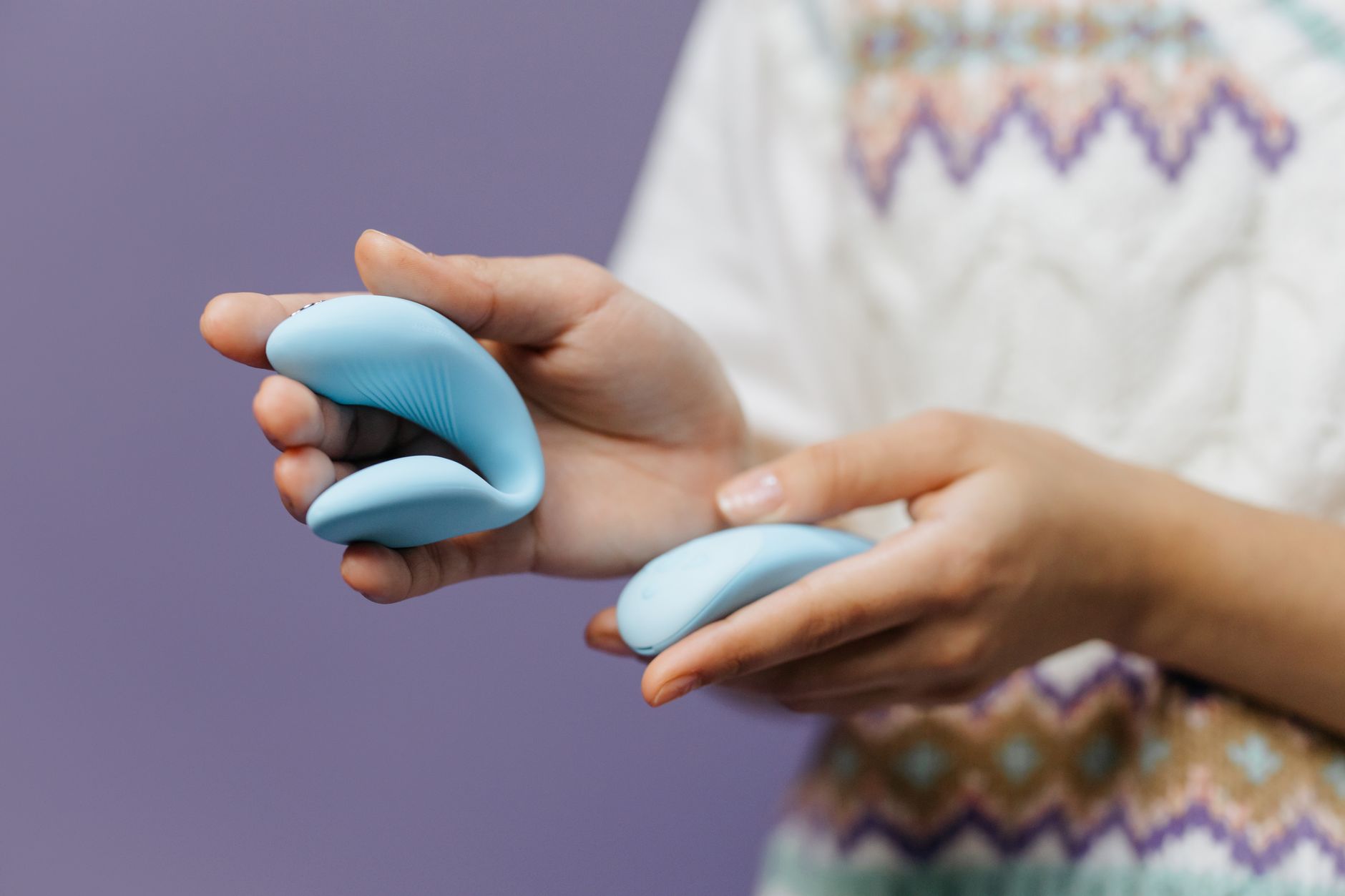
Let's name what's actually happening
You're aroused. Or your body is, anyway. But your mind is somewhere else. Maybe it's thinking about the argument last week, or the fact that your partner hasn't asked how your day went in months, or something deeper you can't quite name. Your clitoris is responding to stimulation, but your heart doesn't feel invited to the party.
This mismatch between physical sensation and emotional presence is one of the most common disconnects I see in my therapy practice, and it's also one of the most fixable.
Why arousal and emotional intimacy get split in the first place
Here's the thing: your brain has multiple arousal pathways. One runs through pure physical stimulus (sensation). Another runs through emotional safety, recognition, and trust. When a relationship is solid, these pathways talk to each other. When they're not, arousal becomes this lonely, hollow thing.
This happens for several reasons. Sometimes you've built up resentment and your body hasn't caught up emotionally. Sometimes your partner has disconnected, and your nervous system knows it even if you haven't said it out loud. Sometimes life stress has taught you to separate physical sensation from feeling as a survival tactic.
But here's what matters: this is not your fault, and it's absolutely repairable.
The role Lemon clitoral vibrators play in reconnection
Lemon vibrators, especially air-suction devices like the Lem vibrator, work differently than traditional vibrators. They stimulate through gentle suction and pulsing patterns rather than deep vibration. This changes what happens in your body.
When you use a Lemon clitoral vibrator alone first, you're practicing something crucial: you're learning what your arousal actually feels like when there's zero performance pressure. No watching your partner's face. No wondering if you're taking too long. No managing someone else's needs.
This solo reconnection phase is not selfish. It's diagnostic and therapeutic at once.
Step one: rebuild arousal literacy in private
Start by using your Lemon vibrator alone, with the explicit goal of noticing rather than coming. This sounds backward, but it's the whole point.
Set aside 20 minutes. No goal. No finish line. Use one of the lower patterns on the Lem vibrator (pattern one or two) and simply notice what happens in your body as sensation builds. Does your breathing change? Do you notice a warmth in your chest along with the physical arousal? Do you feel yourself relax, or do you tense up?
Most people discover that their arousal was never actually disconnected. It was just muted. Quieter. Like the volume got turned down on one channel while another stayed loud.
When you reconnect with that sensation in private, you're reminding your nervous system that pleasure is still possible for you. That your body still wants to wake up.
Step two: bring intentionality to partnered experience
Once you've rebuilt that internal connection, partnered touch becomes different. You're not trying to feel something you can't access. You already know it's there.
Introduce your Lemon vibrator into partnered sex deliberately and with conversation first. Not "I want to use this because something's wrong with us," but something like: "I want to show you what I'm discovering about my body. I'd like you here with me while I use this."
This reframes it. Your partner isn't being replaced. They're being invited into your rediscovery.
Use your lemon clitoral vibrator while your partner is present and touching you elsewhere. Your neck. Your inner thigh. Your chest. The Lem vibrator handles the direct clitoral work, but your partner's touch reminds your nervous system that this is connection, not just sensation.
Step three: slow down the approach to orgasm
When arousal feels disconnected from emotion, people often speed up to escape the discomfort. They want to get to the finish line before the feeling of wrongness catches up.
Instead, slow it down. Use your Lemon vibrator on a lower pattern. Stay with the patterns that feel good but don't push toward climax. This sounds counterintuitive when orgasm is usually the goal, but what you're rebuilding here is not the ability to come. You already have that. What you're rebuilding is the ability to feel while you come.
It takes maybe three to five sessions of deliberately not rushing before your brain starts to relax. Before it starts to believe that pleasure doesn't have to be an escape hatch.
The emotional intimacy pieces that vibrators can't fix alone
Lemon vibrators are brilliant tools, but they're tools. They can't resolve the underlying disconnection in the relationship itself.
If the emotional intimacy gap exists because you and your partner have stopped talking, no vibrator will fix that. If resentment has built up, pleasure tools might accidentally become another way to avoid the real conversation.
So you have to do the relationship work too. This means:
Talk about the disconnect directly with your partner. "When we're intimate, I notice I feel physically responsive but emotionally somewhere else. I want to change that." Name it without blame.
Identify one small way to increase non-sexual touch and attention. A longer hug. A conversation without phones. A question about their inner world. Emotional intimacy lives in tiny moments.
Consider working with a couples therapist if the gap feels wider than a conversation can bridge. This isn't failure. It's how you protect the relationship.
When to know this is working
You'll notice the shift in small ways. First, your solo sessions with your Lemon vibrator will feel less mechanical. Your breathing will deepen earlier. Your mind will stick around longer.
Then in partnered situations, you'll notice your partner's touch landing differently. Not more intense, but more present. You'll hear yourself actually making sound instead of being silent. Your body will tell you it's safe to feel.
Eventually, you won't need to use your clitoral vibrator in every partnered session. Not because the tool is bad, but because you've rebuilt the neural pathways between sensation and safety. The vibrator becomes a choice, not a necessity.
Aroundtwo to three weeks of intentional practice, most people notice that reconnection has started. Four to six weeks in, it feels almost normal again.
A note on patience with yourself
Rebuilding the connection between your body's arousal and your heart's trust is not fast. But it's also not mysterious. It's something your nervous system wants to do. You're not fighting against yourself. You're literally reminding your body that it's safe to feel good while being emotionally present.
Lemon clitoral vibrators like the Lem vibrator are particularly helpful for this work because the gentler suction-based stimulation allows for more sustained arousal without the intensity that can short-circuit emotional awareness. You're not chasing overwhelm. You're building presence.
Your pleasure matters. Your emotional safety matters even more. Using these tools together means you don't have to choose between them anymore.
FAQ
What if I can't feel pleasure at all, not just disconnected pleasure?
That's different and worth naming with a doctor. Difficulty with arousal can signal depression, medication side effects, hormonal changes, or relationship patterns so deep they've become physical. A clitoral vibrator is still useful in that context, but it's one piece of a bigger conversation with a healthcare provider.
Can using a vibrator with my partner make the disconnection worse?
Only if it's used as a band-aid instead of a bridge. If you introduce a Lemon vibrator while avoiding the emotional conversation, yes, it might feel like you're both just trying harder to ignore the real problem. That's why the conversation comes first, not after. The vibrator is the tool for deepening something that already has a foundation.
How do I bring this up without making my partner feel inadequate?
Frame it as your own discovery, not their failure. "I realized I want to explore my arousal more intentionally" is different from "I can't come with just you." Both might be true, but the first one invites them in. The second one puts them in a defensive corner.
Is it normal that I feel more connected after using a vibrator alone than with my partner?
Completely. Solo time with your Lemon clitoral vibrator has zero performance pressure. It's your nervous system in its safest possible state. That's why it often feels easier at first. But the goal is to carry that safety into partnered time, not to replace partnered time with solo time.
What if my partner doesn't want me using vibrators?
That's a values conversation, not a vibrator conversation. You're entitled to your own pleasure and your own body. A partner who refuses that is refusing your autonomy. That's a bigger issue than whether or how you use a lemon sexual toy. This might be where couples therapy actually starts.
How long before this feels normal again?
Most people notice small shifts in two to three weeks. Larger reconnection typically takes four to eight weeks of consistent, intentional practice. But "normal" will look different than it did before. You'll have more awareness of your own arousal, more agency in it, and honestly more pleasure.
Your feelings matter. Your body matters. When both are moving in the same direction, you've got something solid.