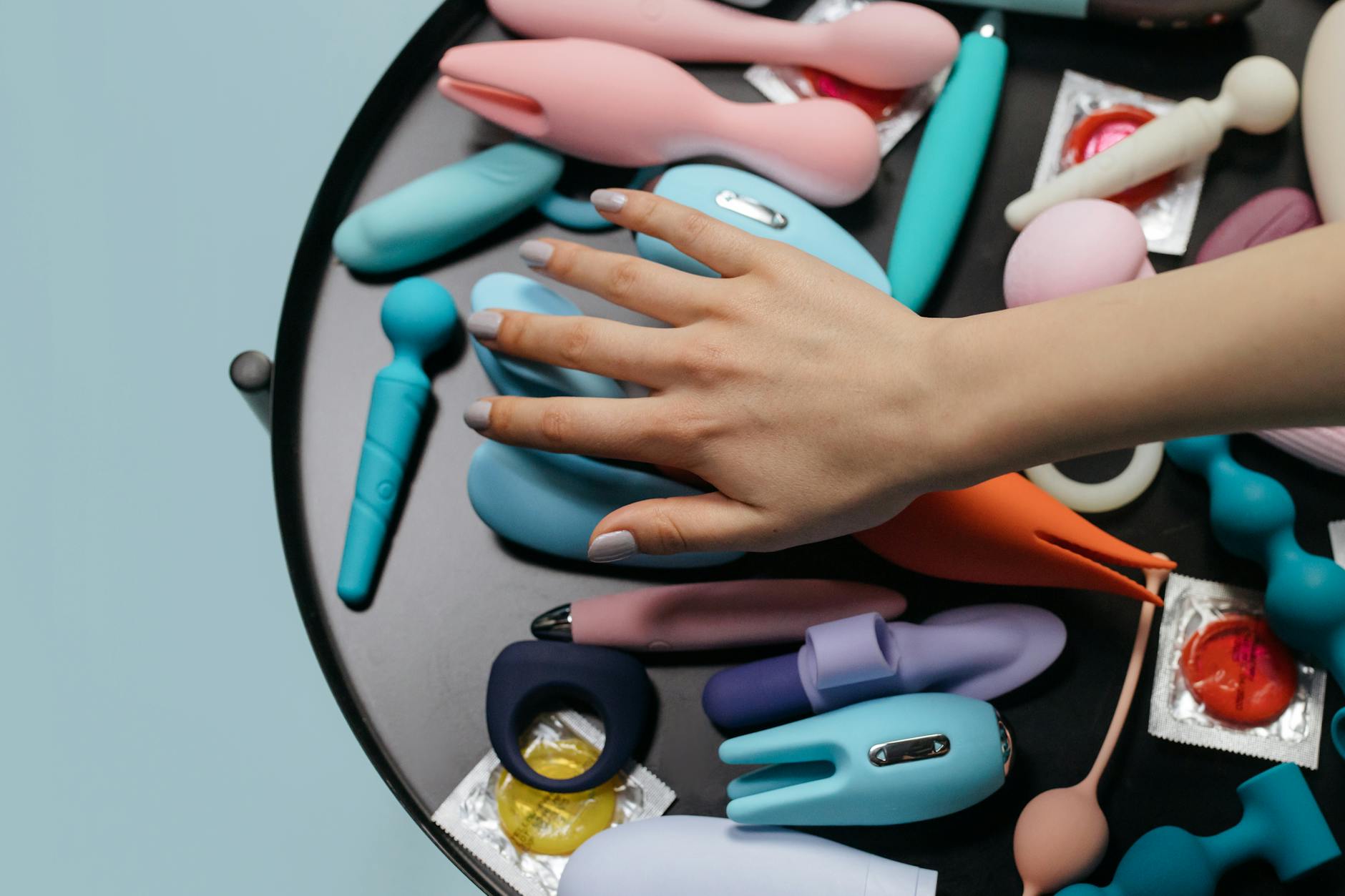
How to Use Lemon Vibrators When Clitoral Arousal Feels Inconsistent With Hormonal IUD
Let's be real. A hormonal IUD is genuinely one of the most effective contraceptives out there. It's also one of the least predictable for pleasure.
The Mirena, Skyla, Kyleena, and Liletta all release a synthetic progestin directly into your system. Unlike hormonal birth control pills, which you can theoretically adjust or stop mid-cycle, an IUD sits there for three to five years, continuously releasing a tiny amount of hormone that most of your body never notices. Your clitoris, though? It notices.
Here's what I've heard from hundreds of people wearing hormonal IUDs: "Some days I can't come at all. Other days I'm extremely sensitive. I never know which version of myself I'm getting." That unpredictability is not a character flaw. It's not in your head. It's a real physiological side effect, and it changes how you approach pleasure.
Why hormonal IUDs scramble arousal
Unlike oral contraceptives, which create a steady hormone environment, an IUD releases hormone in a pattern that varies based on where it sits in your uterus, how your body absorbs it, and individual metabolism. Some days the concentration in your bloodstream is higher. Some days it's lower. Your clitoris, which is hormone-responsive tissue, responds to those fluctuations.
Progestin specifically dampens dopamine and norepinephrine signaling. Those are the neurotransmitters that fire up desire and physical arousal. Less of them circulating means slower warm-up, softer sensation, and sometimes flat-out nothing happening no matter how hard you try.
The kicker: this isn't uniform. One person has it resolve after six months as their body adjusts. Another deals with it for the full lifespan of the device. A third person finds that skipping a period reduces the effect, while a fourth sees no change at all.
What you're experiencing is valid, and there's a toolkit that works.
Mapping your arousal pattern
The first move is data. For two to three weeks, track not just when you want pleasure, but when you're able to feel it. I'm not talking about writing a novel. A phone note with the date, the day of your cycle (if you still bleed), and a one-word note: "responsive," "sluggish," "dead." That's it.
After three weeks, patterns emerge. Maybe you're more responsive right after your bleed starts. Maybe sensitivity peaks mid-cycle, even though most people lose it there. Maybe you're never actually "responsive" and instead you're "less resistant" on certain days.
That information is gold. It tells you when to reach for a clitoral vibrator and when to reach for lube, longer warm-up time, and patience instead.
Building a micro-arousal protocol
When you're on a hormonal IUD and sensation is sluggish, foreplay isn't a bonus phase. It's the whole thing. Here's what that looks like:
Start without the vibrator. Spend five to ten minutes on direct touch, kissing, or whatever turns you on mentally. This isn't quick. Your brain needs time to build dopamine. Your skin needs time to sensitize.
Use water-based lube from the start. Not because you're dry (though you might be), but because it reduces friction resistance. When sensation is already muted, friction can read as discomfort instead of pleasure.
Introduce your Lemon vibrator on the lowest setting. The Lem or any clitoral vibrator from Lemon works here because suction and pulsing patterns don't require the same level of baseline sensation as traditional vibration does. You're not waiting for your clitoris to "wake up" to a buzz. You're building sensation from a calmer starting point.
Stay there for a while. Fifteen to twenty minutes on pattern 1 or 2 might feel tedious. It's not. Your body is building arousal slowly, and interrupting that by jumping up to intensity 7 breaks the chain reaction. Patience compounds.
The inconsistency is actually workable
Here's the thing people miss: inconsistency isn't failure. It's information. On days when arousal feels dead, you're not broken. You're on a day when the IUD's hormone release is higher, or your body is metabolizing it differently, or a dozen other factors are at play.
Instead of fighting it ("Why can't I just feel normal?"), you adjust: longer warm-up, maybe a partner who's willing to spend time on non-goal-oriented touch, or a solid solo session with nowhere to be for an hour.
On days when arousal is there, you lean in. Those responsive days are real. Your body isn't lying to you one day and telling the truth another. Both days are true.
When to reach for different tools
A Lemon vibrator isn't always the answer, even though it's an excellent one for IUD-related arousal issues. Here's the breakdown:
On sluggish days: Start with the vibrator on the lowest setting after ten minutes of manual arousal. The pulsing patterns work better than constant vibration because they give your nervous system something to anticipate.
On moderately responsive days: You can skip straight to the vibrator after five minutes of warm-up. You don't need the extended preamble.
On days when nothing is landing: Don't force it. A vibrator isn't going to override hormonal suppression. Instead, use the time for other kinds of pleasure. Manual stimulation. Partnered touch. Erotic audio. Sensation play with temperature or texture. Some days, pleasure is the goal. Some days, connection is.
The partner conversation, if there is one
If you're with someone, they need to understand that your body's responses aren't about them or about how attracted you are. An IUD's hormone doesn't care about desire or love. It's a chemical thing happening at the receptor level.
The most useful conversation isn't "I'm broken." It's "My sensation changes week to week. When I'm responsive, I want X. When I'm sluggish, I want Y. Can we plan around that?" That's not unsexy. That's partnership.
Managing expectation and staying consistent
One reality: using a clitoral vibrator when sensation is suppressed might feel like you're not getting anywhere for several minutes. That's actually the warm-up working. The lack of immediate payoff doesn't mean the device isn't working. It means your body needs time.
I recommend a fifteen-minute minimum commitment when you're starting out. If nothing shifts by then, stop. You're not failing. You're collecting data on a sluggish day.
Consistency over time matters more than intensity in any single session. If you use a Lemon vibrator three times a week and track the pattern, within four weeks you'll know which days respond and which don't. That knowledge is what transforms an IUD from feeling like a pleasure liability to just another variable you've learned to navigate.
When to talk to your doctor
Arousal suppression from a hormonal IUD is normal. Complete inability to achieve any sensation or orgasm even on responsive days might not be. If you notice the flatness spreading instead of staying cyclical, if numbness in the area develops, or if you're experiencing depression or significant mood changes alongside the arousal shift, bring it up.
Removing the IUD would reset your hormone environment in four to six weeks. Some people do that and feel liberated. Others do it and realize the IUD wasn't the problem. Having the option is what matters.
Your pleasure isn't a footnote to contraception. It's part of your quality of life.
FAQ: Hormonal IUDs and Arousal
Can a hormonal IUD permanently affect my ability to have orgasms?
No, though it can suppress it while the device is in place. The suppression is hormone-related, not structural. Remove the IUD, and within a few weeks your dopamine and norepinephrine signaling normalizes. Sensation rebounds. That said, some people's bodies adjust to the IUD over months, and arousal improves on its own. Others don't. There's no way to predict which camp you're in without living through it.
Is it normal for arousal to be better some days and worse others on an IUD?
Completely normal. The hormone releases in a non-linear way. Absorption varies. Your stress, sleep, and cycle (if you still have one) all affect how receptive your body is. Charting the pattern helps you stop feeling random and start feeling rhythmic. That shift alone reduces anxiety around sex, which often improves pleasure.
Should I use a different vibrator than I would without an IUD?
Not necessarily different, but differently. A clitoral vibrator from Lemon works well because suction and pulsing patterns meet your tissue where it actually is, without demanding the sensation your body can't produce right now. Stronger isn't better when sensation is suppressed. Smarter patterns are better.
Can I use a Lemon vibrator if I have an IUD? Is there a risk of displacement?
Yes, you can use it safely. External clitoral stimulation has no interaction with an IUD. The IUD sits in your uterus. Your clitoris is external. They're not in the same anatomical neighborhood. Vibration, suction, orgasms themselves—none of it displaces an IUD. That's a myth.
How long does it take to feel normal arousal again after an IUD is removed?
Hormone levels shift within days, but perception of arousal often takes four to six weeks. Your brain and body need time to re-acclimate to normal dopamine cycling. Most people describe a steady uptick in responsiveness over that window, then stabilization. Some notice the shift is dramatic. Others notice it's subtle. Both are fine.
If my arousal suppression is severe, should I remove the IUD?
That's between you and your doctor, but here's the logic: if pleasure and desire are central to your quality of life, and the IUD is actively suppressing both, removal is a legitimate choice. Contraception that makes you feel worse isn't working for you, even if it's technically working to prevent pregnancy. You have alternatives. Trying one is reasonable.
The path forward
A hormonal IUD is genuinely effective at preventing pregnancy, and it's also genuinely variable when it comes to arousal. Those two things can both be true. Your job isn't to force your body into responding the way it used to. It's to understand how it responds now and build a pleasure practice around that.
That might mean longer foreplay. It might mean reaching for a Lemon vibrator on certain days and not others. It might mean conversations with a partner about timing and expectation. It might mean accepting that some days are generative and some days are maintenance, and both count.
Your pleasure matters. Your body's actual response matters more than what you think should happen. Start there, and everything else gets easier.
If you're feeling stuck between desire and sensation, reaching out helps. Get in touch and we can talk through what's happening.