
Let's start with what nobody says out loud
One of you wants sex more than the other. This isn't a failure. It's not a sign the relationship is dying, and it doesn't mean anyone's broken. It's one of the most common things that happens in long-term partnerships, and it's also one of the least talked about because admitting it feels vulnerable.
Here's what I see in my practice: desire mismatch creates a painful loop. The higher-desire partner starts to feel rejected. The lower-desire partner starts to feel pressured. Both pull back. Connection gets thinner. Sex (if it happens at all) starts to feel transactional instead of intimate.
Clitoral vibrators like Lemon's offerings can interrupt that loop, but only if you use them in the right way. The goal isn't to force your partner to want more sex. It's to create a different conversation entirely.
Why desire doesn't always match, and why that matters
First, understand that desire disparity is rarely about love. I've worked with couples where both partners are deeply committed and highly attracted to each other, and one person's libido is significantly lower than the other's.
The reasons are wide-ranging. Stress, medication, hormonal shifts, previous sexual trauma, exhaustion, depression, anxiety about performance, or simply different baseline drives. Sometimes the lower-desire partner isn't interested in partnered sex but is very interested in solo pleasure. Sometimes they're interested in specific types of touch or scenarios, just not the ones currently on the table.
The mistake most couples make is treating desire mismatch as a problem to solve. They try to fix the lower-desire partner (increase their testosterone, prescribe them a vibrator, book a romantic getaway). But the real problem isn't that someone doesn't want sex. It's that the mismatch has created distance and resentment.
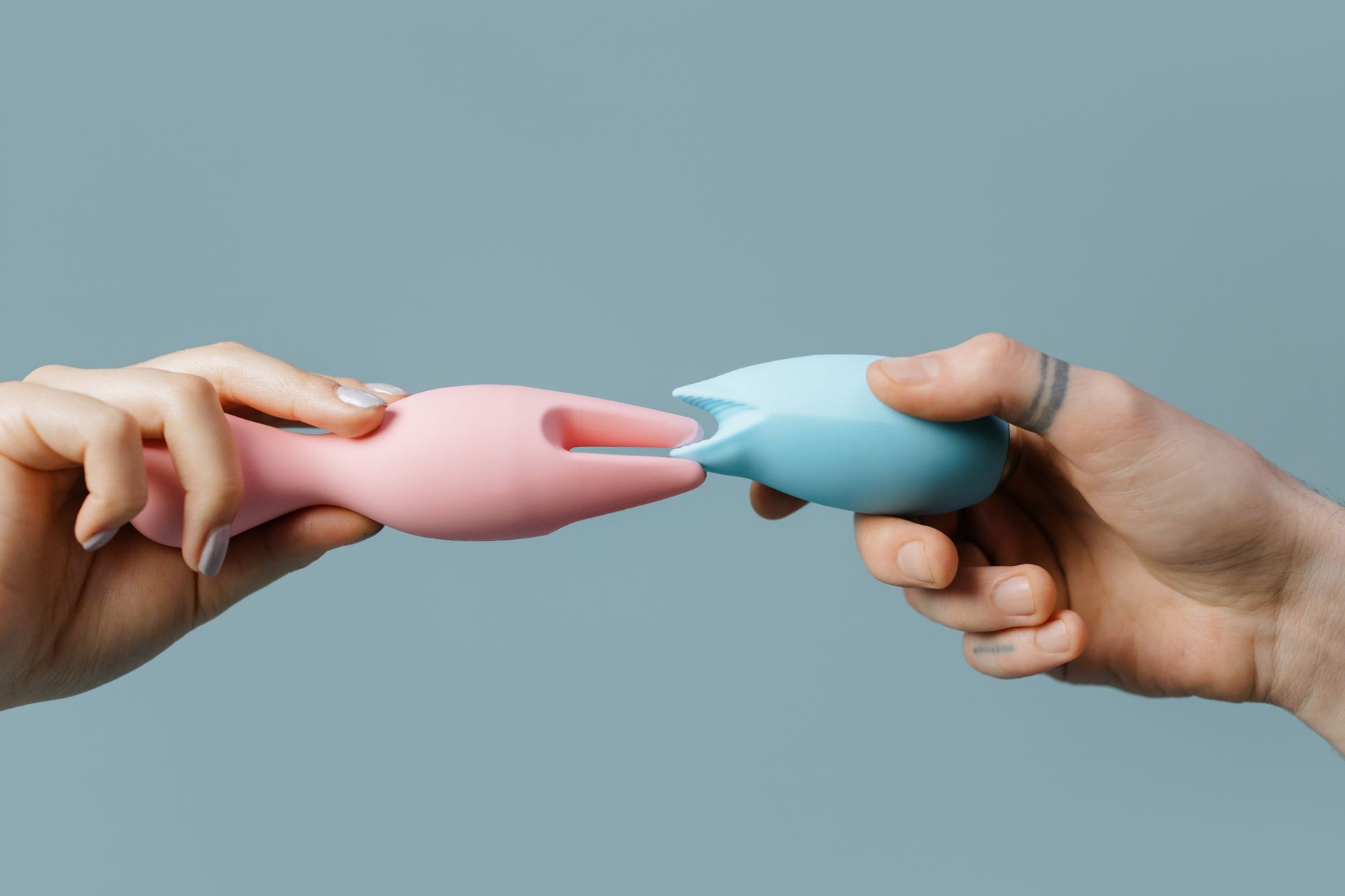
Photo by cottonbro studio on Pexels
The three things that actually help
1. Separate sex from pressure.
If your lower-desire partner feels like sex is an obligation, their arousal system shuts down further. This is neurological, not willful. When someone's in a defensive state, their capacity for pleasure literally diminishes.
A clitoral vibrator becomes useful here because it shifts the frame from partnered performance to individual pleasure. Your partner isn't performing for you. They're having their own experience, which you get to witness or participate in without expecting a specific outcome.
2. Create space for different kinds of intimacy.
Often, lower-desire partners are interested in connection, but not specifically in intercourse or the kinds of foreplay leading to intercourse. They might want extended touch, kissing, massage, or solo pleasure while their partner is present. They might want sex once a week instead of three times a week, and that's their actual baseline, not a compromise.
When you introduce something like the Lemon vibrator into this space, you're saying, "I'm interested in your pleasure, regardless of whether it looks like what I expected." That's relationship repair language.
3. Address the real issue underneath.
If your partner is stressed, exhausted, depressed, or dealing with medication side effects, fixing the desire mismatch requires fixing those things first. This is uncomfortable because it means you might need to say: "I want to have more sex with you, and I also notice you're running on empty. What would actually help?"
That's a very different conversation than, "Why don't you want me?"
How to actually introduce clitoral vibrators into a mismatched-desire relationship
Don't lead with the vibrator. Lead with the conversation.
Honestly though, something like: "I've been thinking about how we've both felt disconnected around sex, and I don't want to keep pushing you or feeling rejected. I read about how couples navigate this differently, and I'm wondering if you'd be open to exploring something that might feel less pressured."
Then, only if they're receptive, talk about options. This might be:
- Solo pleasure while they're present (no pressure to perform or reciprocate)
- Mutual masturbation with a Lemon vibrator or clitoral sucker device
- Them using a vibrator while you do something else, just in the same room
- Scheduled sex that removes the constant negotiation ("Thursdays and Saturdays" sounds unsexy but it actually reduces pressure)
- Expanding the definition of sex to include things that feel less demanding
The actual introduction matters. Don't surprise them with a toy. Don't frame it as fixing them. Frame it as creating space for both of you to feel okay.
What happens when one person loves vibrators and the other doesn't
This is real. You might be excited about exploring lemon vibrators or clitoral suckers, and your partner might find them uncomfortable, distracting, or unsexy. That's information, not rejection.
Some lower-desire partners find that vibrators actually increase performance pressure (now there's a device keeping score). Others find them genuinely helpful because they allow for faster arousal and quicker satisfaction, which means less time commitment and less mental load.
The only way to know is to ask. And to be prepared for the answer to be, "Not for me, but I'm glad it works for you."
Solo pleasure as a legitimate part of desire mismatch
Here's something most people don't discuss: when desire is mismatched, solo pleasure becomes more important, not less.
If you're the higher-desire partner, your own clitoral vibrator practice becomes a release valve. It's not cheating. It's not settling. It's maintaining your own sexual health while your partnership navigates a legitimate mismatch.
When how to use lemon vibrators when clitoral response takes time with anxiety is relevant for you, having your own practice means you're not dependent on your partner's arousal to access your own. That alone can reduce resentment significantly.
For the lower-desire partner, solo practice can actually increase partnered desire over time. Reconnecting with your own arousal system without performance pressure sometimes makes partnered sex more appealing. Not always. But sometimes.
The conversation after the vibrator
This is crucial and most couples skip it. After using a clitoral vibrator together (or separately), there's a tendency to just move on. But the real work happens in the reflection.
"How did that feel?" "Did anything surprise you?" "What would feel better next time?" "Did this change anything about how you're thinking about sex?"
You're not looking for the conversation to fix the desire mismatch. You're looking for it to feel less lonely. That's the actual goal. When both partners feel seen and not rejected, the desire gap becomes less painful, even if it doesn't shrink.
When to get help beyond toys
If the desire mismatch is creating significant resentment, contempt, or withdrawal, a relationship therapist or sex therapist becomes necessary. A vibrator can help bridge a gap, but it can't address deeper issues like unresolved hurt, poor communication, or untreated depression.
Similarly, if your partner's low desire is new and unexplained, medical evaluation is worth exploring. Medication changes, thyroid issues, hormonal shifts, and other health factors can tank libido quickly.
Tools help. But they're not fixes for relationship rupture or medical issues.
The long-term view
Desire mismatch is not a phase you solve and move past. It's something most long-term couples navigate at different points. Your baseline might change. Theirs might change. Life circumstances shift.
What changes is how you talk about it. Whether you can hold your own desire without making your partner feel broken. Whether they can care about your pleasure even if they don't share the same drive. Whether you can both tolerate the mismatch without it meaning something's wrong with the relationship.
That's where clitoral vibrators actually help. They're a tangible way of saying, "I want your pleasure to matter, separate from mine. I'm not trying to fix you. I'm trying to find a way we both feel okay." That conversation, backed up by intention and real tools, can change everything.
People also ask
Can using a vibrator make my partner more interested in sex?
Not directly. But it can reduce pressure, which sometimes allows desire to emerge naturally. If your partner's low libido is driven by feeling pressured or anxious, creating space for pleasure without obligation sometimes helps. The vibrator itself isn't magic. The shift in how you're approaching sex together is what matters.
Is it normal for desire to be this mismatched after years together?
Completely normal. Research suggests around 30-40% of couples experience significant desire discrepancies at some point. After the initial attraction phase fades, baseline differences in libido often become more obvious. This doesn't mean you're incompatible. It means you're in a phase that requires different communication.
What if my partner refuses to talk about desire mismatch at all?
That's avoidance, and it's a sign you might benefit from a couples therapist who can create a safe space for the conversation. Some people avoid because they're ashamed, some because they don't have the language, some because they're afraid of rejection. A skilled therapist can help both of you move past that block.
Should I use lemon vibrators during partnered sex if my partner's low-desire?
Only if they're genuinely interested. If they're tolerating it to make you happy, you're reinforcing pressure, not reducing it. The goal is for toys to feel optional and pleasurable, not like another obligation. Start with solo use or mutual masturbation where there's zero expectation of performance.
Does desire mismatch mean we're not a good match?
Not necessarily. Sexual compatibility is more complex than desire matching. Some couples with different baseline drives have great sex lives because they communicate well and get creative. Other couples with similar drives have terrible sex lives because of poor communication. Desire mismatch is a challenge, not a deal-breaker.
What if I want to use vibrators but my partner feels threatened by them?
That's about insecurity or outdated beliefs about what toys mean. It's worth exploring gently: "I'm not replacing you. I'm exploring my own pleasure. This might actually help us both." If they can't move past the threat feeling, how to use lemon vibrators when you want pleasure but your partner isn't interested offers deeper strategies for navigating that specific dynamic.
The bottom line
Desire mismatch is not a sex problem. It's a communication and connection problem that manifests around sex. You can't vibrate your way out of it. But you can use tools like clitoral vibrators as conversation starters. As ways of saying, "Let's find a way both of us feel okay." As proof that you're willing to meet your partner where they are, not where you wish they were.
That's when real change happens.
If you're navigating desire mismatch and feeling stuck, reach out. Sometimes talking to someone outside the relationship helps clarify what you both actually need.