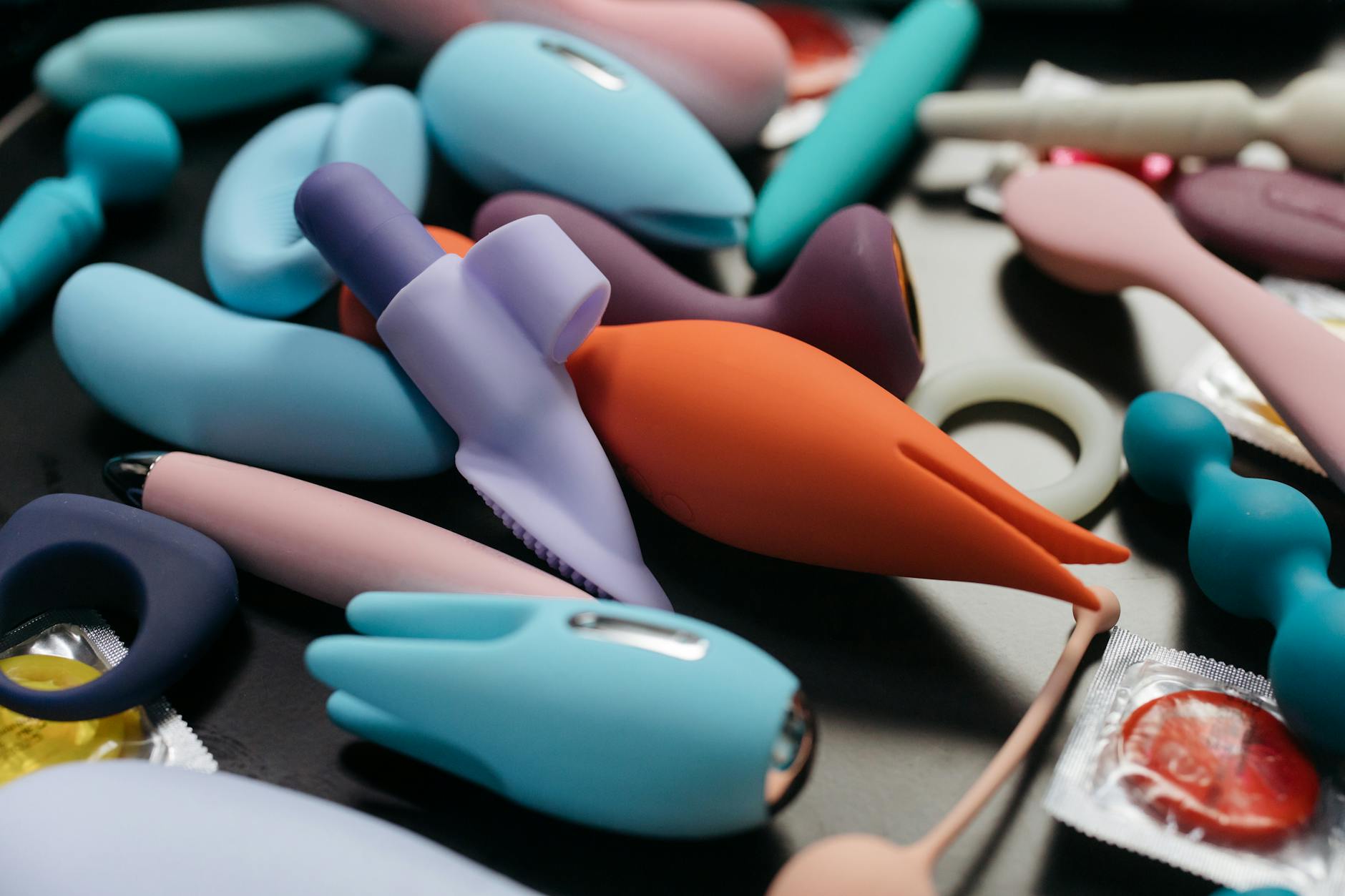
Here's what nobody tells you about arousal after 40
Your body didn't lose the ability to feel pleasure. What changed is the pace. Arousal that used to build in five minutes now takes fifteen. The clitoral response that was automatic is now more of a negotiation. And honestly? Most people blame themselves instead of understanding the physiology.
I've worked with hundreds of clients navigating this exact shift. The pattern is always the same: confusion, frustration, then relief once they understand what's happening and what actually helps.
Why arousal slows down as you age
Three things happen simultaneously around midlife.
First, blood flow changes. The vascular system that delivers blood to genital tissue becomes less responsive to arousal cues. This isn't weakness. It's a natural shift in how your nervous system prioritizes resources. Younger bodies flood that area almost reflexively. Older bodies require more deliberate stimulation to trigger the same response.
Second, nerve sensitivity reorganizes. You don't lose nerve endings in your clitoris, but the way those nerves fire changes. They need stronger, more sustained input to reach threshold. This is why the light touch that worked at 25 can feel like almost nothing at 45.
Third, hormonal backdrop matters more than you think. Even if you're not in menopause, testosterone levels shift gradually after 35. Testosterone drives desire across all bodies, and less of it means arousal requires more intention. Your brain has to decide you want this. Your body won't just decide for you anymore.
Here's the thing that changes everything: none of this means your capacity for pleasure shrinks. It just means the route to pleasure requires a different map.
Why lemon clitoral vibrators work particularly well for slow-building arousal
A good clitoral vibrator, like the Lem, solves three problems that slow arousal creates.
First, intensity without strain. Vibrators deliver consistent, focused stimulation at a level most hands can't maintain. They don't get tired, don't vary pressure, and don't require you to hold a position that makes your arm cramp. That consistency matters because your aging nervous system responds better to reliable, predictable input than to variable touch.
Second, direct clitoral access. After 40, the clitoris can feel more sensitive to diffuse pressure but actually less responsive to light touch. A suction-based vibrator like the Lem bypasses that confusion entirely. It creates sustained pressure and pulsation that your nerve endings recognize immediately. No guessing, no adjustment period. Just effective stimulation.
Third, speed of arousal. Because lemon vibrators deliver such direct, efficient input, they can compress that 15-minute ramp-up into five or six minutes. That matters when life is busy and patience is limited. You're not waiting for your body to "catch up" to your intention. The tool brings your body alongside your mind faster.
How to use Lemon vibrators when arousal takes time
Three tactical adjustments make all the difference.
Start with a longer warm-up, but make it active. Don't lie there hoping. Use your vibrator to begin arousal, not to finish it. Many people assume vibrators are the finale. With slow-building arousal, they're often the opening. Spend five to ten minutes on the Lem at lower intensity settings. You're not trying to orgasm yet. You're inviting your nervous system to wake up and pay attention.
Use pattern over intensity. Most lemon vibrators have multiple settings. When arousal builds slowly, varying the pattern often works better than cranking up the power. A pulsing rhythm can trigger nerve response more effectively than steady vibration. Experiment with pattern 2 or 3 for several minutes, then shift. That variation keeps your nervous system engaged instead of adapting and tuning out.
Build in pause and anticipation. This sounds counterintuitive, but stops actually accelerate arousal when it's slow to start. Use the vibrator for a minute, pause, use it again. That stop-start rhythm prevents habituation and keeps your nerve endings responsive. It also gives your body a chance to register sensation instead of numb out from constant input.
The role of lubrication and tissue health
Slower arousal often coincides with changes in vaginal lubrication and clitoral tissue thickness. This isn't separate from the arousal question. It's central to it.
When tissue is thinner or drier, direct vibration can feel overwhelming instead of pleasurable. That's not a sign the vibrator is wrong. It means your tissue needs support to respond well.
Water-based lubricant becomes your ally here. Not because you're broken, but because it creates a protective layer that lets sensation build gradually instead of shocking your system. Apply it generously around the clitoris before you start. This is especially true if you're a few years past menopause or if you've noticed tissue changes.
If arousal is slow and sensation feels numb, that's worth discussing with a provider. Genitourinary syndrome of menopause (GSM) or hormonal shifts might need topical support. A good gynecologist can assess this in minutes. Don't suffer through it.
The mental piece nobody talks about
Physiology is half the story. The other half is permission.
When arousal slowed down in my own life and in my clients' lives, the reflex was shame. "Why does this take so long now?" becomes "Something's wrong with me." Then you stop trying because the emotional friction is higher than the physical benefit.
But here's what I know from two decades of clinical work: the slowdown is normal. Needing a tool is normal. Taking longer is not failure. It's just a different timeline.
The clients who thrive with lemon vibrators after 40 are the ones who reframe the slowness. Instead of "Why does this take fifteen minutes?" it becomes "I get to spend fifteen minutes on myself. That's a gift." Instead of "I need a toy now," it becomes "I get to use a tool designed for my body's actual needs."
That mental shift matters as much as the vibrator itself.
When slow arousal points to something bigger
Most of the time, slow arousal after 40 is just physiology. Sometimes it signals something worth exploring with a partner or a therapist.
If arousal is slow only with a partner but faster alone, that's not a body problem. That's usually a trust or attention problem. How to Use Lemon Vibrators When You Want Better Orgasms With a Partner Present digs into that specifically.
If arousal is slow and you're on an SSRI or similar medication, arousal slowdown is a documented side effect. That's worth troubleshooting with your prescriber. How to Use Lemon Vibrators When Sensation Feels Muted During SSRI Medication covers tools for that context.
If arousal is slow and desire has evaporated entirely, that points to something different. Low desire and slow arousal aren't the same thing. One is about capability, the other about wanting in the first place. If desire is truly gone, talking to a menopause-informed provider or therapist makes sense.
The rhythm changes, not the capacity
After working with hundreds of people through this transition, I've learned something simple: the people who handle slow arousal best are the ones who stop fighting the pace and start working with it.
Your body isn't broken. Your pleasure capacity is intact. The route just changed. Lemon vibrators, lubricant, patience, and permission form a toolkit that works spectacularly well when you're willing to use all four.
Slowness isn't the enemy. Shame about slowness is. Once you separate those two, everything shifts.
People also ask
How long does it typically take for arousal to build after 40?
It varies widely, but 10 to 20 minutes is common compared to the five to ten most people remember from earlier decades. Some people notice the shift starts in the late 30s. Others don't feel it until their 50s. Hormonal status, stress, relationship quality, and medication all influence this. The key is that if your timeline has shifted and that bothers you, a lemon clitoral vibrator can compress that window significantly without requiring anything be "wrong" with you first.
Does using a vibrator make arousal even slower over time?
No. This is a common worry and completely backward. Using a vibrator doesn't desensitize you to natural touch if you're alternating between them. Your nerve endings don't "prefer" vibration and then reject your partner's hand. What happens is the opposite: consistent stimulation actually helps your nervous system remember what arousal feels like, which can speed up your body's natural response over time.
Is slow arousal after 40 always hormonal?
No. Hormones play a role, but so do stress, sleep quality, relationship satisfaction, medications, and simple cardiovascular fitness. A person under chronic stress will have slower arousal regardless of age. Someone well-rested and connected to their partner might have arousal that's as quick at 45 as it was at 25. Don't assume slow arousal means you need hormone therapy. Sometimes you need better sleep, less work stress, or a reconnection conversation with your partner.
Can I use a lemon vibrator if I have thin or sensitive tissue?
Absolutely, but start at lower intensity and use generous lubrication. The Lem's suction mechanism is actually gentler on sensitive tissue than some vibration-only tools because it distributes pressure differently. Start at pattern one for a few sessions. Your tissue adapts, and you can increase intensity as it feels right. If sensation feels sharp or uncomfortable instead of pleasant, back off and add more lube. Your body will tell you what works.
Why does arousal sometimes feel numb even with a vibrator?
Numbness is different from slowness. If arousal feels genuinely numb, it often points to hormonal changes (especially estrogen and testosterone shifts), medication side effects, or rarely, nerve damage from pelvic trauma. This is worth a conversation with a gynecologist or pelvic health specialist. A vibrator is great for slow arousal, but numbness usually needs medical support alongside any tool.
How do I talk to a partner about needing more time for arousal now?
Keep it simple and specific: "My body takes longer to warm up now, and I want us both to enjoy that process instead of rush through it." Then offer a concrete solution. "I'd love to start with ten minutes of just using this vibrator while you're near me" or "Can we build in more time before we connect?" Frame it as a preference, not a problem. Most partners are relieved to have a clear direction instead of wondering if something's wrong.