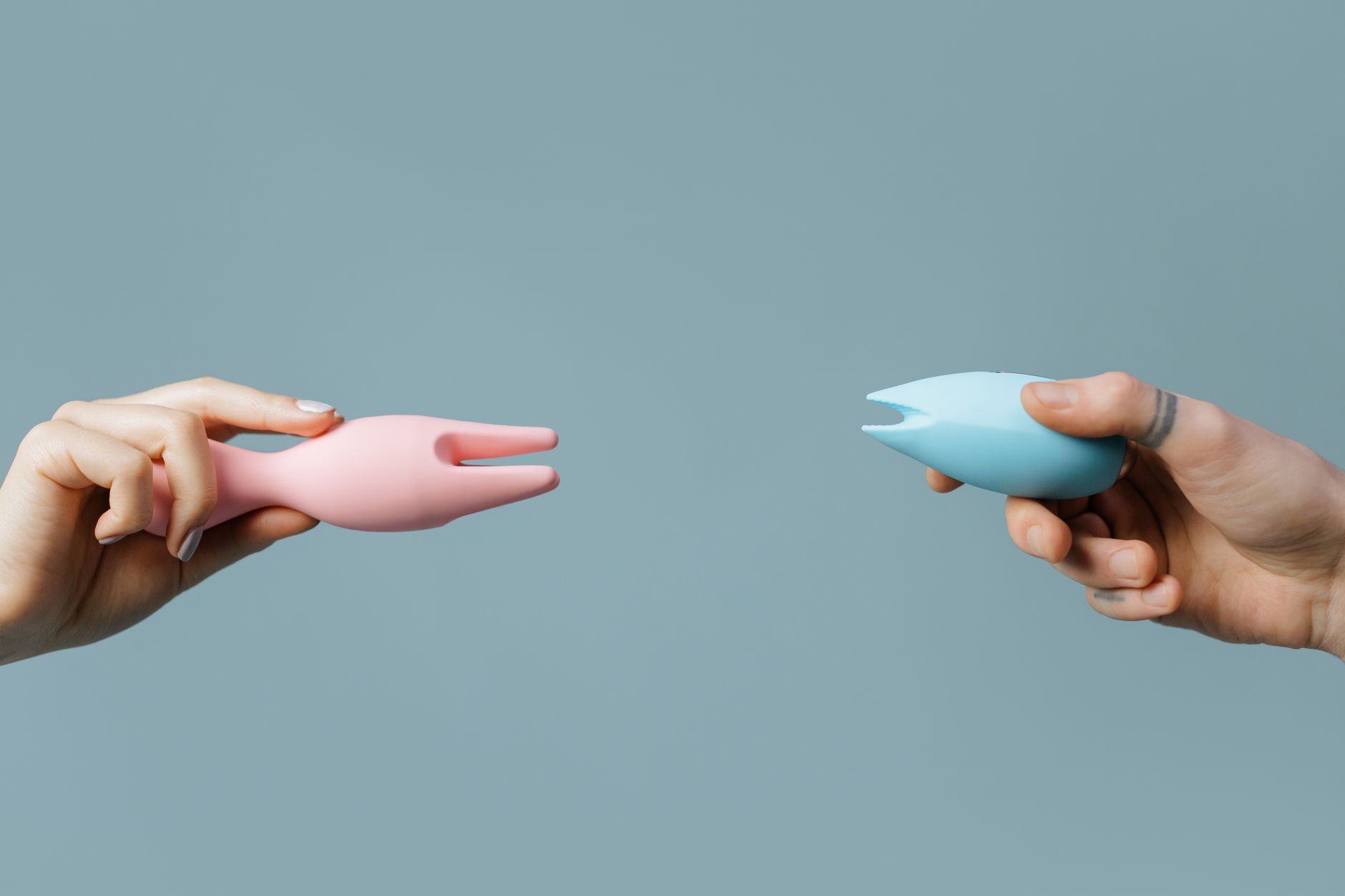
Here's the real thing about vibrators and partners
Most people assume a vibrator in the bedroom means one thing: you're doing it solo. That's such a limiting idea. In couples therapy, I watch this play out constantly. One partner brings up a vibrator, the other partner hears "you're not enough," and the conversation ends. It doesn't have to.
Using a Lemon clitoral vibrator with a partner present is not about replacing them. It's about giving your body what it actually needs to have the kind of orgasm you want, and letting your partner be part of that. Which is hotter, honestly.
Why vibrators change the dynamic when someone else is in the room
When you're alone with a vibrator, you have infinite time and zero performance pressure. Your nervous system settles. Orgasms flow. The moment a partner is watching or touching you, something shifts. Suddenly you're monitoring their reaction, worrying about how you look, calculating whether you're taking too long. That mental load kills arousal faster than anything.
Here's the neuroscience: your brain's pleasure centers and your threat-detection system can't fire at the same time. If you're anxious about judgment, your amygdala is active, which dampens the signals that would otherwise light up your orgasm-capable neural pathways. A vibrator can override that. The sustained, precise stimulation from a Lemon vibrator often breaks through anxiety because the sensation is so focused that your brain has to stop narrating and start feeling.
But only if you frame it right with your partner first.
The conversation that actually works
Don't lead with "I want to use a vibrator during sex." That sentence is too abstract and sounds like critique. Instead, try: "I orgasm more reliably when I have direct clitoral stimulation. I want that with you. A vibrator would help me get there."
Notice the difference. One is about you. One sounds like him not being enough. The second one is about both of you getting what you want.
If your partner pushes back, listen for what's underneath. Usually it's one of three things: they feel replaced, they worry it means you're not attracted to them, or they don't understand how it works mechanically. Each one needs a different answer.
Feel replaced? "I want you to be part of this. I want you watching me, touching me, being here while I use it."
Think you're not enough? "This isn't about you. This is about my body. Plenty of people with penises use vibrators on themselves during partnered sex and nobody questions it."
Don't understand? "Watch me use it solo first. Let's figure out together what positions work." Seeing it in action removes mystery and often kills hesitation.
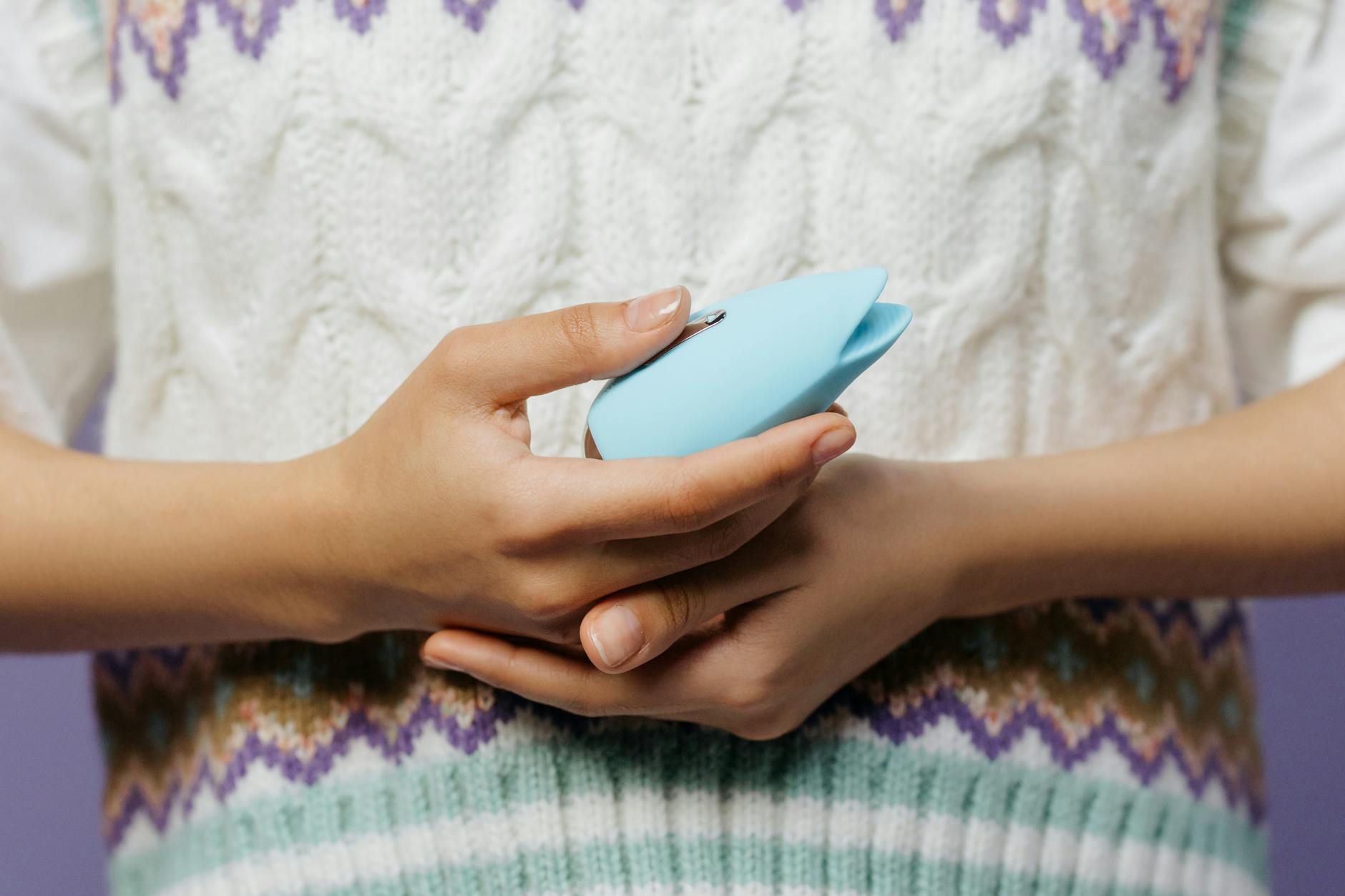
Photo by cottonbro studio on Pexels
How to actually integrate it into sex
Start with the simplest setup: you use it on yourself while your partner does whatever they want. They can be inside you. They can watch. They can touch you elsewhere. The vibrator stays on your clitoris. No complicated choreography.
The best position for this depends on your baseline preference. If you usually have penetrative sex with a partner, most people find that lying on their back with the partner between their legs works best. You've got a clear hand path to your clitoris, the partner's got access, and you can see each other's faces. Lemon clitoral vibrators are small enough that they don't interfere with penetration.
If you usually have sex in other ways, the same principle holds: the vibrator goes where it's comfortable for you to hold it, and your partner works around it. You're not rearranging your whole life. You're adding one small, precise tool.
Timing matters more than position. Most people find it helpful to use the vibrator during arousal and foreplay before penetration starts, then keep it going once penetration is happening. Some people use it only during penetration. Some use it to get close to orgasm, then back off and let their partner's touch take them over the finish line. Every body is different, and trying these variations is part of the fun.
The emotional work that actually matters
Using a vibrator with a partner changes more than the physical mechanics. It changes the conversation you're having about pleasure, about your body, about what you deserve. That's where resistance often lives.
I see this constantly in my practice: one partner has spent years managing the other partner's ego instead of asking for what they need. The vibrator becomes the stand-in. "I don't want to hurt their feelings" really means "I've learned it's not safe to ask for what I want." That's the conversation to have, not the vibrator conversation.
If you've been in a long-term relationship where you've trained yourself to come quietly or quickly or to fake it, introducing a vibrator is an act of radical honesty. It's saying: I actually want to feel good. I'm going to prioritize that. And I'm inviting you to be part of it. Some partners love that. Some partners need time to adjust. Both are normal.
Practical logistics that prevent awkwardness
Buy the vibrator before the conversation. Having a actual Lemon vibrator in your hand makes it real instead of abstract. You can show your partner the size, the design, the noise level. A lot of hesitation evaporates once someone realizes how unobtrusive a modern clitoral vibrator actually is.
Start with partnered exploration outside of sex. Use it together in a non-goal-oriented way. Laugh about it. Play with different settings. Let your partner feel the vibration on their own hand so they understand the sensation. This removes the performance pressure from both of you.
Talk about privacy and storage. If you live with roommates or kids, where does a vibrator go where you're not anxious about it being found? Addressing logistics removes one more source of activation energy.
Agree on a signal if things aren't working. Sometimes the angle is off. Sometimes the sensation is too intense. Sometimes you need to shift position and it kills the moment. Having a "let's pause and adjust" gesture means you don't have to have a full conversation to troubleshoot.
When to recalibrate
After the first time using a vibrator with your partner, you both might feel differently than you expected. You might love it. You might find it awkward and need to try a different setup. You might realize you actually prefer vibrators solo and partnered sex without them. None of those outcomes are wrong.
The couples I see who make this work view the vibrator as information, not a permanent decision. "We tried this, it was weird, we're not doing it again" is as valid as "We tried this, it changed everything." The point is you had the conversation and tried it.
What matters long-term is not whether you use a vibrator, but whether you can ask for what you need and your partner can hear it without defensiveness. The vibrator is just the vehicle for that conversation.
Frequently asked questions
How do I bring this up without making my partner feel inadequate?
Frame it around your body and what helps it work, not around what your partner isn't doing. "My nervous system settles when I have clitoral stimulation, and I want to experience that with you" is fundamentally different from "You don't make me come." Both might be true, but one invites collaboration and one invites defensiveness. Start with the first.
What if my partner thinks vibrators are for people in bad relationships?
That's a belief worth examining. Some partners hold this because they learned it somewhere, often from media. The fastest cure is watching someone they trust use and enjoy one. Offer to show them, solo first, no pressure. Or send them an article about how many long-term couples use vibrators successfully. Knowledge usually beats mythology.
Is it weird to use a vibrator if I can already orgasm with my partner?
Not even slightly. The goal isn't "fixing" an orgasm problem. The goal is often making orgasms more reliable, more intense, or less dependent on perfect conditions. You might already be able to orgasm, but needing 20 minutes of specific touch when you could have the same orgasm in three minutes with a vibrator is a legitimate reason to explore. Efficiency matters.
Should I use a vibrator during every time we have sex?
Absolutely not. Use it when you want to, not when you feel obligated to. Some couples find vibrators useful a few times a month. Some use them every time. Some use them solo only. There's no "correct" frequency. If you start feeling like you can't orgasm without it, that's information worth examining, but the vibrator itself isn't the problem.
What if my partner wants to use it on me, but I prefer using it myself?
Tell them. Control matters. You know the angle that works, the pressure, the speed. Having your partner control the vibrator can be fun, but it's a different experience from controlling it yourself. Both are valid. You can alternate, or you can say "I like holding it" and your partner can do something else. There's no rule that says one of you has to operate every toy.
How do I know if we're ready for this conversation?
You're ready when you're willing to hear a no and stay connected. If bringing this up feels like it might end the relationship or create lasting resentment, that's a sign that the vibrator conversation is actually a deeper relationship conversation. Consider working with a therapist first. A vibrator should add to a relationship, not become a flashpoint for existing problems.
The actual benefit
Honestly, the best outcome isn't the orgasm itself. It's the moment your partner realizes that you asking for what you need is not a threat to them. It's an invitation to know you better. That shift changes everything else. The vibrator is just the door.
If you want to explore this, Lemon clitoral vibrators are designed to be intuitive and partner-friendly. Small enough to integrate, powerful enough to work, quiet enough that you're not performing for neighbors. Start the conversation. Try it. See what happens. Your pleasure matters, and asking for it is the healthiest thing you can do.
For more on pleasure and partnership dynamics, read about how to use Lemon vibrators when rebuilding pleasure with a new partner or explore how to use Lemon vibrators when your partner's arousal takes longer to build.